


Yellow Reishi Liquid Culture Syringe (10cc)
Yellow Reishi Liquid Culture Syringe (10cc) is backordered and will ship as soon as it is back in stock.
Couldn't load pickup availability

Description
Description
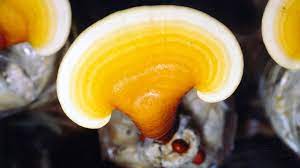
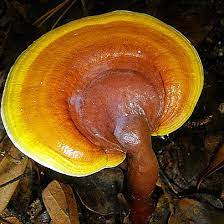
Yellow Reishi Liquid Culture Mushroom Syringe (10cc) — Ganoderma curtisii, first-generation (G1) isolated genetics from Myco Labs. Yellow Reishi is the southeastern American cousin of Red Reishi, forming kidney-shaped caps banded in gold and amber rather than deep red. It is genuinely uncommon in cultivation and the rarest Ganoderma we carry.
- SpeciesG. curtisii
- Volume10cc
- GeneticsG1 Isolated
- DifficultyIntermediate
- Colonization18–21 Days
Why Growers Choose Yellow Reishi
Most people who grow Reishi have only ever grown Ganoderma lucidum. Yellow Reishi is a different species entirely — native to the southeastern United States rather than Asia, and marked by bright yellow and amber banding across a kidney-shaped cap instead of the uniform lacquered red.
Cultivation is essentially identical to Red Reishi, which makes this an easy addition if you already run one. It takes the same supplemented hardwood substrate, the same temperature ranges, and the same slow pace — roughly two months from injection to harvest. It also responds to carbon dioxide the same way, so you control whether you get flat conks or branching antlers by how much you vent the bag.
Like all Ganoderma it has no gills, and it is far too woody to cook. It is grown to be sliced, dried and simmered, or ground for capsules.
What's In the Package
- One 10cc liquid culture syringe, sealed and lab-tested
- 16-gauge 1.5" luer lock needle
- Sterile alcohol prep pad
Yellow Reishi Growing Specifications
| Specification | Details |
|---|---|
| Scientific Name | Ganoderma curtisii |
| Native Range | Southeastern United States |
| Appearance | Kidney-shaped cap with yellow and amber banding; no gills |
| Recommended Substrates | Supplemented hardwood sawdust, hardwood logs, rye berries for spawn |
| Incubation Temperature | 70–80°F |
| Incubation Humidity | 85–90% |
| Colonization Time | 18–21 days |
| Fruiting Temperature | 65–75°F |
| Fruiting Humidity | 90–93% |
| Time to Harvest | 25–35 days after fruiting conditions begin |
| Fresh Air Exchange | Controls form — low FAE gives antlers, high FAE gives flat conks |
| Best Use | Dried and simmered — woody, not a culinary mushroom |
How to Use Your Liquid Culture Syringe
- Let the syringe come to room temperature, then shake gently to redistribute the mycelium evenly through the broth.
- Flame-sterilize the needle until it glows orange and let it cool for a few seconds.
- Wipe the injection port on your grain spawn bag or jar with the alcohol prep pad.
- Inject 2–3cc per quart jar, or 3–5cc per 3–5 lb spawn bag. One 10cc syringe inoculates roughly 2–4 containers.
- Incubate at 70–80°F in the dark for eighteen to twenty-one days until fully colonized.
- Spawn to supplemented hardwood sawdust, then choose your form: keep the bag sealed for antlers, or open and vent for banded flat caps.
Frequently Asked Questions
What is the difference between Yellow Reishi and Red Reishi?
They are separate species. Yellow Reishi is Ganoderma curtisii, native to the southeastern United States, with a kidney-shaped cap banded in yellow and amber. Red Reishi is Ganoderma lucidum, with a uniform deep-red lacquered surface. Growing conditions and timings are effectively the same, so if you have run one you can run the other without changing anything.
Why is my Yellow Reishi growing antlers instead of a flat cap?
Carbon dioxide, the same as with any Ganoderma. In a sealed or poorly ventilated bag the mycelium stretches into branching antler shapes rather than forming a cap. Increase fresh air exchange and the growing tips flatten into banded conks. Many growers restrict air deliberately to produce antler form, so treat this as a setting rather than a fault.
What substrate is best for Yellow Reishi?
Supplemented hardwood sawdust gives the most consistent indoor results, and hardwood logs work outdoors for growers willing to wait a season. Rye berries make good spawn. Like all Ganoderma it is a hardwood decomposer and will not perform on straw or manure-based substrates.
How long does Yellow Reishi take to grow?
Grain colonization runs eighteen to twenty-one days, and fruiting another twenty-five to thirty-five days after conditions are set. Plan for roughly two months from injection to harvest. Expect a long white knuckle stage before any color develops.
Can you eat Yellow Reishi?
Not as a culinary mushroom. Like Red Reishi it is woody, corky and bitter, and it does not soften with cooking. It is harvested, sliced and dried, then simmered into a decoction or ground for encapsulation. Harvest once the white growing edge has hardened and the banding has fully developed.
How much liquid culture do I use per bag or jar?
Use 2–3cc per quart grain jar and 3–5cc per 3–5 lb spawn bag. A single 10cc Yellow Reishi syringe will inoculate roughly two to four containers. Adding more than the recommended dose does not speed colonization meaningfully and simply uses up the syringe faster.
How should I store the syringe before use?
Keep it refrigerated between 35 and 45°F and never freeze it — freezing ruptures the cell walls and kills the culture. Store it in the sealed bag it shipped in, away from strong odors. Bring it back to room temperature and shake gently before injecting.
Packed to Arrive Alive
A liquid culture syringe is living mycelium, and the trip from our Illinois lab to your door is the part of its life you have the least control over. That is why every Myco Labs liquid culture ships inside a foil-lined insulated mailer rather than a plain envelope. The insulation buffers the syringe against summer heat sitting in a delivery truck and against sub-freezing temperatures in winter, so your culture arrives viable in either extreme.

When it arrives: move the syringe to the refrigerator at 35–45°F until you are ready to inoculate. Never freeze it. Bring it back to room temperature and shake gently before use.
Sold as a mycological culture for cultivation purposes. Nothing on this page is intended to diagnose, treat, cure, or prevent any disease.
Our Growing Experts Recommend
Products our growers commonly use with this item

