

 $3.00 off
All-in-One Mushroom Grow Bag (4 lbs) for Manure Loving Mushrooms
$2299$2599Unit price /Unavailable-
 $6.00 off
XL All-in-One Mushroom Grow Bag (6 lbs) for Manure Loving Mushrooms
$2899$3499Unit price /Unavailable 
 Up to $4.00 off
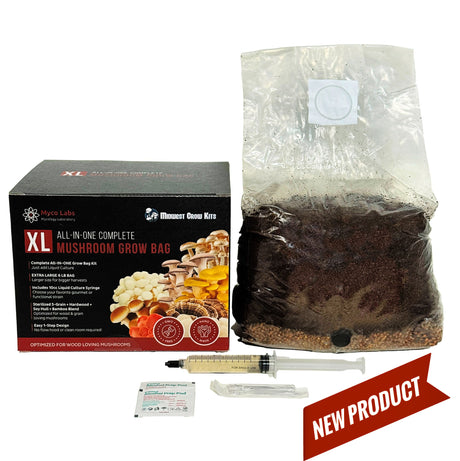
Complete XL ALL-IN-ONE Wood Lover's Mushroom Grow Bag Kit (6LB)
$2599$2999Unit price /Unavailable-


-
$84.99 off
Wholesale All-in-One Mushroom Grow Bag (4 lbs) for Manure Loving Mushrooms (Case of 10)
$14500$22999Unit price /Unavailable -
$86.92 off
Wholesale All-in-One Mushroom XL Grow Bags (6 lbs) for Manure Loving Mushrooms (Case of 8)
$14500$23192Unit price /Unavailable -






How to Choose the Right All-in-One Grow Bag
All-in-one bags look similar from the outside, but the substrate inside is formulated for specific mushroom species. Getting this match right is the difference between a successful grow and a slow, struggling one.
What's actually inside an all-in-one bag
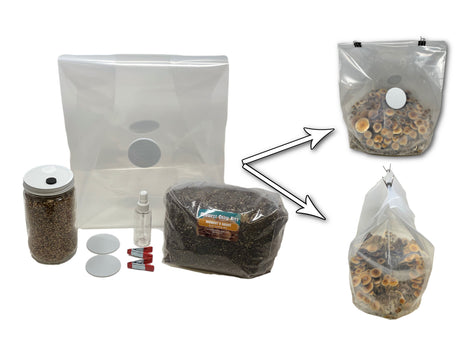
Every Midwest Grow Kits all-in-one bag contains four things, fully sterilized and sealed:
- Sterilized bulk substrate (formulated for your target species)
- Sterilized grain spawn mixed in or layered separately
- A self-healing injection port for inoculation
- A HEPA filter patch for sterile fresh air exchange
You don't need to mix, sterilize, or transfer anything — the bag handles colonization and fruiting in one container.
Match the bag to your mushroom species
Different mushrooms eat different substrates. Picking the right bag is the single most important decision you'll make.
Manure-Loving Bags — The most popular all-in-one bags. Substrate is based on CVG (coco coir, vermiculite, gypsum) blended with manure-based nutrients. Works with the widest range of common cultivated mushroom species and is the right choice for the vast majority of growers. The 4 LB All-in-One Bag for Manure-Loving Mushrooms is our best-selling option.
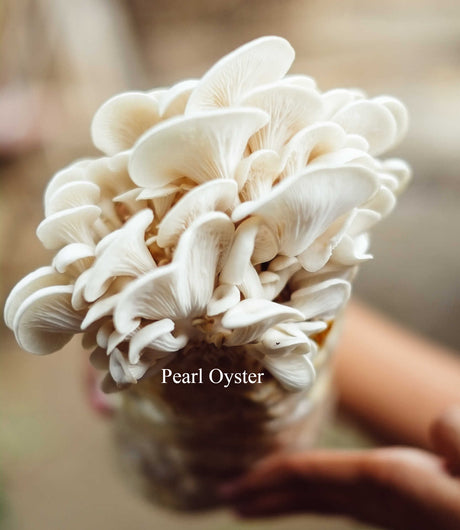
Wood-Loving Bags — Substrate is based on hardwood sawdust and supplemental nutrients. Required for species like lion's mane, shiitake, oyster, king trumpet, and reishi. If you put a wood-loving species in a manure bag, it will struggle or fail.
What size bag should you buy?
- 4 LB bag — The standard size and our most popular. Produces solid yields, fits easily on a shelf, and uses one full syringe per bag. Best for most home growers.
- 6 LB bag — Larger format for bigger flushes and higher-volume grows. Slightly longer colonization time but proportionally larger harvests.
- Case quantities (wholesale) — For experienced growers running multiple bags simultaneously, commercial operations, or anyone who wants to lock in lower per-bag pricing.
What you'll need in addition to a bag
An all-in-one bag is most of what you need, but you'll also need:
- A syringe — either a liquid culture syringe (recommended for faster colonization) or a spore syringe from a trusted vendor
- 70% isopropyl alcohol for sanitizing the injection port
- A stable room temperature around 70–75°F for colonization
- Indirect light during fruiting (a window or basic LED is enough)
We don't sell spore syringes, but you'll need to source one from a trusted vendor. See our 2026 Spore Syringe Buying Guide for vendor recommendations and what to look for when ordering. If you'd rather skip spores entirely, our liquid culture syringes colonize faster and more reliably for most growers.
The basic grow process
For a full walkthrough with photos, see the step-by-step all-in-one bag grow guide. The short version:
- Inject your syringe through the self-healing port (sanitized with alcohol first)
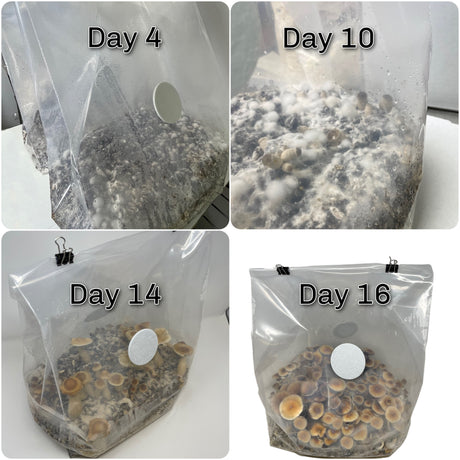
- Incubate the bag at room temperature for 2–4 weeks until fully colonized
- Fruit by cutting the bag open, fanning it occasionally, and watching for pins
- Harvest typically 7–14 days after fruiting begins
Frequently Asked Questions About All-in-One Grow Bags
What is an all-in-one mushroom grow bag?
An all-in-one bag is a single sealed grow bag containing sterilized substrate, grain spawn, a self-healing injection port, and a built-in HEPA filter. You inject your syringe through the port, let the mycelium colonize the entire bag, then cut it open to fruit mushrooms — all inside the same container. No transferring, no mixing, no separate fruiting chamber required.
What's the difference between a manure-loving bag and a wood-loving bag?
The substrate inside is different. Manure-loving bags use a CVG-based substrate blended with manure nutrients, which is what most common cultivated mushroom species prefer. Wood-loving bags use hardwood sawdust, which is required for species like lion's mane, shiitake, oyster, king trumpet, and reishi. Match the bag to your species or your grow won't produce well.
What do I inject into an all-in-one bag?
You have two choices. A liquid culture (LC) syringe contains living mycelium and colonizes faster and more reliably — this is what we recommend for beginners. A spore syringe contains mushroom spores and works but takes longer to germinate. Since we don't sell spores, check our spore syringe buying guide for trusted vendors.
How long does an all-in-one bag take to colonize?
Typical colonization is 2–4 weeks at room temperature (70–75°F). Liquid culture syringes colonize on the faster end of that range; spore syringes are slower. Once the bag is fully white with mycelium, it's ready to fruit.
How much mushroom will one bag produce?
A healthy 4 LB bag typically produces 1–2 pounds of fresh mushrooms across multiple flushes, depending on species and growing conditions. A 6 LB bag produces proportionally more. Most bags yield 2–3 flushes before they're exhausted.
What's the difference between an all-in-one bag and a monotub kit?
An all-in-one bag is a single sealed bag where colonization and fruiting both happen inside the bag. A monotub kit uses separate components (colonized spawn mixed into bulk substrate inside a filtered tub), which produces significantly larger yields but takes more steps. Bags are simpler; tubs yield more. Many growers use bags to learn, then move to tubs for bigger harvests.
Do I need a still air box or flow hood to use an all-in-one bag?
Not for injecting — the self-healing injection port is designed to be used in a normal room with basic sanitation (70% alcohol on the port, clean hands). For more advanced techniques like grain-to-grain transfers or opening the bag during incubation, a still air box or flow hood reduces contamination risk.
Can I reuse an all-in-one bag after it stops producing?
No — once the substrate is exhausted, the bag is done. The substrate is consumable. Many growers compost the spent substrate (it's nutrient-rich) or break it up and use it to inoculate outdoor garden beds.
What if my bag gets contaminated?
Contamination usually shows up as green, black, pink, or orange colors that look different from the white mycelium. If you spot it early and it's a small area, you may be able to continue. If it spreads, the bag is compromised — bag it up, seal it, and dispose of it without opening indoors. Most contamination comes from a non-sterile injection or a punctured filter patch.