


Premium 5-Grain Spawn Bags | Sterile Grain Bags for Mushroom Cultivation
$2500Unit price /Unavailable-
-
 $1.00 off


 $4.00 off

-
-
$2.00 off
-
$5.00 off
-
$5.00 off
Pearl White Oyster Grain Spawn Bag 5 LB
$2499$2999Unit price /Unavailable -
$15.00 off
-
$7.00 off
-
$5.00 off
-
$5.00 off
-
-
$6.00 off
Chestnut Colonized Grain Spawn Bag 5 LB
$2899$3499Unit price /Unavailable -
$5.00 off
-
$8.00 off







Which Grain Spawn Option Is Right for You?
Grain spawn comes in five different formats depending on what you want to do with it. Here is how each one fits a different stage of cultivation.
Spawn Bags — Our Flagship Product
Best for: Most growers. Inject a liquid culture or spore syringe, wait for full colonization, then mix into bulk substrate.
Sterilized grain in a sealed bag with a self-healing injection port and HEPA filter patch. You do the inoculation; we handle everything else. The bag is engineered for full colonization in 14 to 21 days at room temperature with a quality LC syringe.
Two main options: the Premium 5-Grain Spawn Bag (our top seller, blended for fastest colonization), or the Original Rye Berry Spawn Bag (the classic single-grain option, ideal for growers who prefer pure rye).
Grain Spawn Jars — For Jar-Based Workflows
Best for: Growers who prefer jars over bags, small monotub builds, or jar-based grow kit systems.
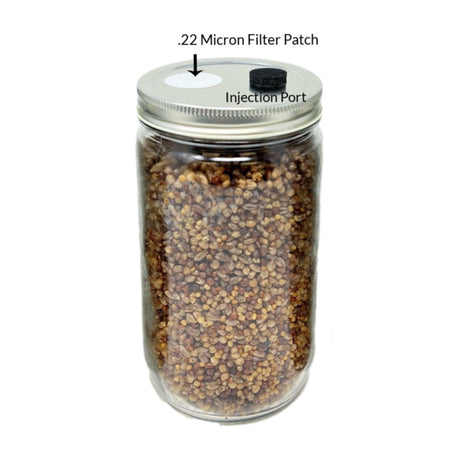
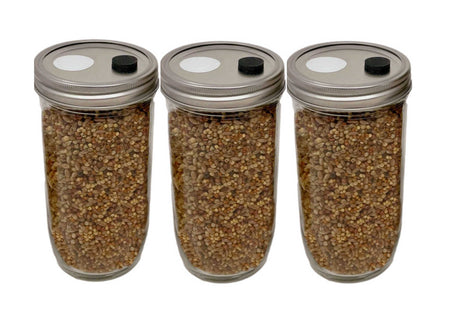
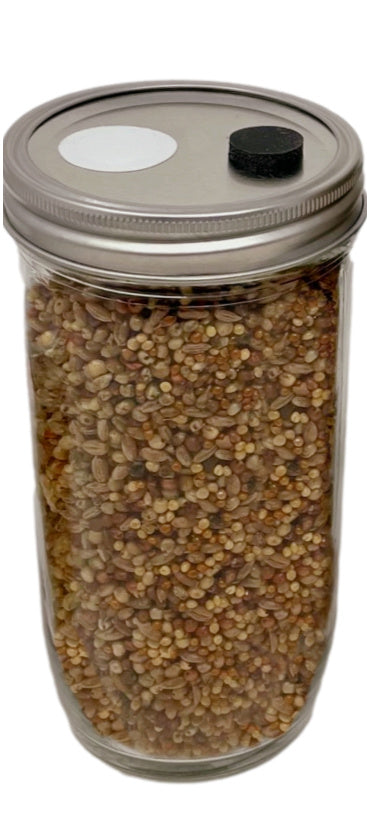
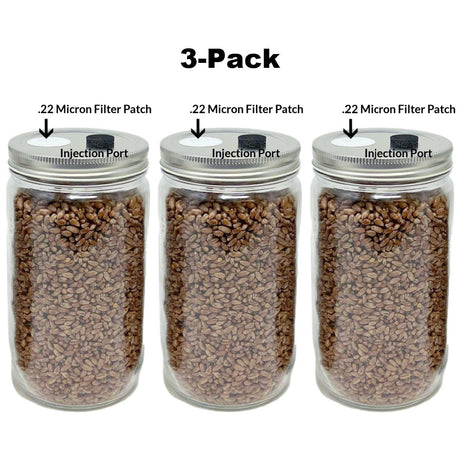
Sterilized grain in larger 32oz mason jars (not the small half-pint PF Tek jars). Same grain blend and sterilization spec as our bags, just packaged in reusable glass jars with self-healing injection lids. Our top option is the Premium 5-Grain Jar 3-Pack (32oz), which is also our recommended spawn for 28Q small monotubs.
If you are looking for the smaller half-pint PF Tek jars, those live in our BRF / PF Tek Jars collection.
Colonized Grain Spawn Bags — Skip the Incubation Phase
Best for: Monotub growers and commercial producers who want to skip 2 to 3 weeks of incubation and start fruiting faster.
We have already inoculated and fully colonized the grain for you with your choice of gourmet genetics. No injection step, no colonization wait. Just mix directly into bulk substrate when it arrives. The fastest path from order to fruiting.
All-in-One Grow Bags — Grain Spawn Pre-Mixed With Substrate
Best for: Beginners and growers who want the simplest possible workflow. One bag, one injection, fruit inside the bag.
Sterilized grain spawn pre-mixed with bulk substrate in a single sealed bag. You inject through the self-healing port, let it colonize fully, then cut open the bag to fruit. No transfers, no separate fruiting chamber. The most beginner-friendly option in the lineup.
Bulk Dry Grain — For DIY Growers
Best for: Experienced growers who hydrate, bag, and sterilize their own grain in-house. Commercial operations and high-volume cultivators.
Raw, dry grain in bulk quantities. You handle the soaking, simmering, drying, bagging, and pressure-sterilizing yourself. The most economical per-pound option for anyone running their own sterilization workflow with a pressure cooker or autoclave.
What is in our 5-Grain blend?
The Premium 5-Grain blend is engineered for the fastest possible colonization while staying easy to break apart and mix into bulk substrate. It contains:
- Rye berries — the classic mushroom grain, dense with nutrition, slow but vigorous colonization
- White milo — small, hard, fast-colonizing, excellent at breaking up the bag
- Red milo — similar colonization properties to white milo with additional micronutrients
- White millet — tiny grains that fill gaps and dramatically increase total surface area for mycelium
- Red millet — complements white millet with a slightly different nutrient profile
The mix of grain sizes creates more total surface area than any single grain, which means faster colonization. Smaller grains also break up more easily when you shake the bag during incubation, which speeds up colonization further by distributing inoculation points throughout the substrate.
Why our spawn bags are different
- Made fresh daily in-house at Midwest Grow Kits. Not sourced from a third party, not sitting in inventory for months.
- Overnight soak, simmer, and dry hydration process. Most DIY grain ends up either too wet or too dry. Our process produces perfectly hydrated grain every batch.
- Pressure-sterilized for 3 hours in our autoclaves. Longer than most home sterilization workflows, which significantly reduces contamination risk from endospore-forming bacteria.
- Unicorn 10T spawn bags, 3-mil construction. Industry-standard professional spawn bags. Strong enough to handle agitation without tearing.
- 0.22 micron filter patch. Allows gas exchange while blocking airborne contaminants.
- Self-healing injection port. Sealed entry point for syringe inoculation, closes itself after needle removal.
- Best within 90 days. Up to 120 days refrigerated. Grain colonizes fastest when fresh.
How much spawn do I need for my monotub?
Different tub sizes need different amounts of grain and substrate. Our recommended spawn-and-substrate ratios:
- 28Q small monotub: One 32oz grain jar works best (a spawn bag also works, paired with 4 lbs of bulk substrate)
- 44Q medium monotub: One spawn bag (2.25 to 2.5 lbs) plus 7.5 lbs of bulk substrate
- 66Q large monotub: Two spawn bags (5 lbs total) plus 10 lbs of bulk substrate
These amounts are dialed in to the optimal grain-to-substrate ratio (roughly 1:3) for the volume of each tub. Going leaner saves money but slows colonization; going heavier wastes grain.
Quick decision tree
- First spawn bag, or want the simplest reliable workflow? Premium 5-Grain Spawn Bag.
- Prefer pure rye, or working with a workflow built around rye? Original Rye Berry Spawn Bag.
- Spawning a 28Q small monotub? Premium 5-Grain Jar 3-Pack (32oz).
- Want to skip incubation entirely? Colonized Grain Spawn Bag (we colonize it for you).
- Want the easiest beginner workflow with substrate included? All-in-One Grow Bag.
- Doing your own sterilization at scale? Bulk Dry Grain.
Frequently Asked Questions About Grain Spawn
What is grain spawn?
Grain spawn is sterilized grain (rye, millet, milo, or a blend) that mushroom mycelium colonizes after inoculation. Once fully colonized, the grain is mixed into bulk substrate to inoculate the substrate quickly and uniformly. Grain spawn is the standard intermediate step in most modern mushroom cultivation workflows.
What is the difference between 5-grain spawn and rye spawn?
Rye is a single-grain option. The dense, nutritious berries support strong colonization and have been the standard mushroom grain for decades. The Premium 5-Grain blend mixes rye with milo and millet to increase surface area and break up easier during incubation, which speeds up colonization. Both work well. The 5-grain colonizes faster and breaks apart more easily; rye is the classic standard preferred by many experienced growers.
How long does grain spawn take to colonize?
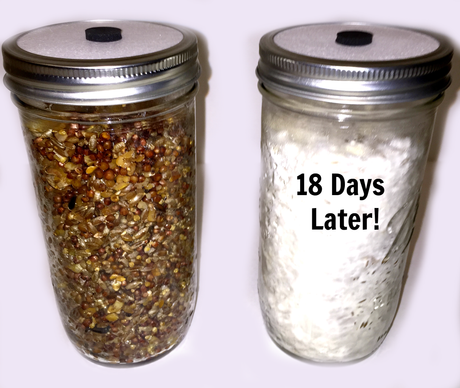
Full colonization typically takes 14 to 21 days at room temperature (70 to 75 degrees Fahrenheit) when inoculated with a quality liquid culture syringe. Spore syringes take longer, often 21 to 35 days. Colonization speed depends on substrate freshness, culture vigor, temperature, and how well the bag is shaken during incubation to distribute the mycelium.
How much liquid culture should I inject into a spawn bag?
For a 2-quart (2.25 to 2.5 lb) spawn bag, inject 2 to 4cc of liquid culture. For smaller jars, 1 to 2cc per quart is the standard. More is not better. Over-injection wastes culture and can introduce more potential contamination from the syringe itself.
How long do spawn bags last?
Our spawn bags work best when used within 90 days of production. Refrigerated, they can last up to 120 days. Grain colonizes fastest when fresh, so we make bags daily and ship the freshest stock first. We do not sit on inventory.
What grain is best for mushroom cultivation?
Different grains have different strengths. Rye is dense and nutritious. Millet has high surface area. Milo combines toughness with fast colonization. The Premium 5-Grain blend combines all three benefits, which is why it is our top seller. For specific use cases, single-grain rye or even pure WBS (wild bird seed) can be the right answer.
Why are your spawn bags sterilized for 3 hours?
Most DIY home sterilization runs 90 minutes or less, which kills active microbes but does not reliably kill endospores (the dormant, heat-resistant forms produced by some contaminant bacteria). Three hours at full pressure in our autoclaves kills endospores too, which is why our bags have a dramatically lower contamination rate than typical home-sterilized grain.
What is the difference between spawn bags and colonized spawn bags?
A spawn bag is sterilized grain you inoculate yourself. A colonized spawn bag is grain we have already inoculated and fully colonized for you, ready to mix directly into bulk substrate. Colonized bags cut 2 to 3 weeks of incubation time out of your workflow. Standard spawn bags are more economical and give you control over which species you grow.
Can I use grain spawn directly without bulk substrate?
You can fruit directly off grain spawn, but yields are dramatically lower than with bulk substrate. Grain spawn is designed to inoculate bulk substrate at roughly a 1:3 grain-to-substrate ratio, which is where the big flushes come from. Fruiting off straight grain is more of a backup plan than a primary technique.
How much spawn and substrate do I need for each monotub size?
For a 28Q small monotub, we recommend one 32oz grain jar for best results (a spawn bag with 4 lbs of substrate also works). For a 44Q medium monotub, use one spawn bag (2.25 to 2.5 lbs) plus 7.5 lbs of bulk substrate. For a 66Q large monotub, use two spawn bags plus 10 lbs of bulk substrate. These amounts are dialed in for the volume of each tub and the optimal grain-to-substrate ratio.
Do I need a flow hood to inoculate grain spawn?
No, but a still air box or laminar flow hood reduces contamination risk significantly. For a single bag inoculation through the self-healing port, basic sanitation with 70 percent isopropyl alcohol on the port and the syringe needle is usually enough. For grain-to-grain transfers or any work that involves opening the bag, a flow hood is much safer.