

Find the right size autoclave
Tell us your daily load and the power at your site. We'll match the machine.
Compare all six sizes
| Model | Load per cycle | Power | Typical cycle | Price |
|---|---|---|---|---|
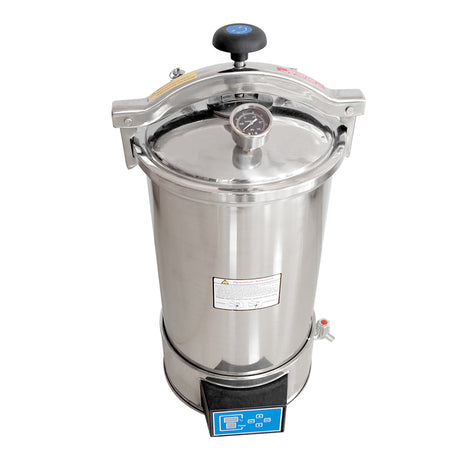
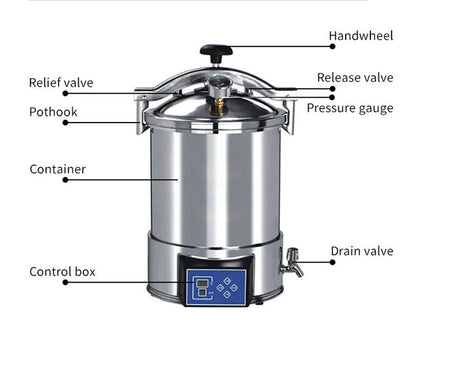
| Bonsai 25Q benchtop | 14 quart jars, 15 × 3 lb or 8 × 5 lb bags | 110V outlet, 2 kW | 90 min hold for grain jars | $659.00 |
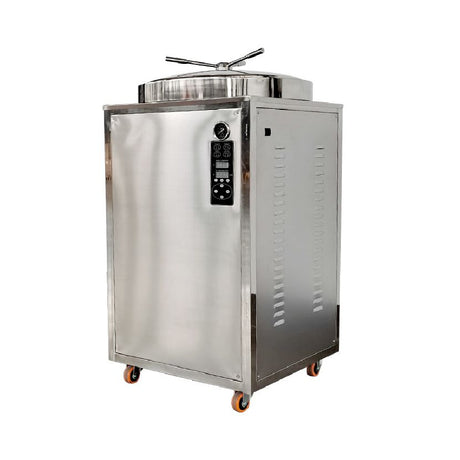
| Bonsai 150L | 48 × 3 lb or 24 × 5 lb bags | 208–240V, 30A, 6 kW | 4–4.5 hrs | $2,799.00 |
| Bonsai 200L | ~72 × 3 lb or ~40 × 5 lb bags | 220/240V, 40A, 8 kW | About 6 hrs, full load | $3,799.00 |
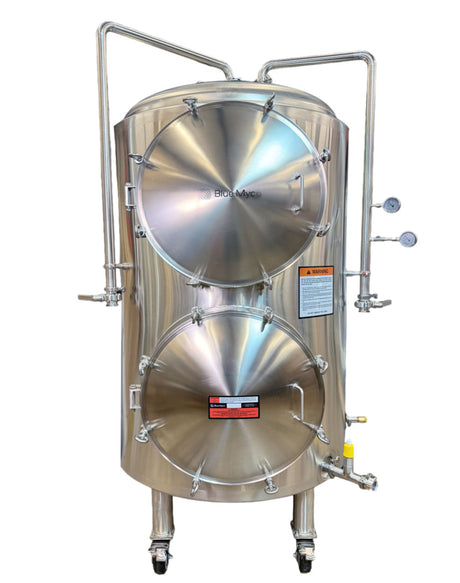
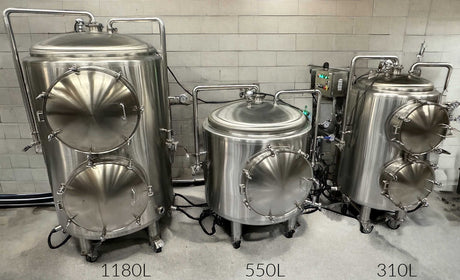
| Blue Myco 310L | 150 × 3 lb bags (450 lbs) | 220V, 50A, 9 kW | 3.5 hrs | $12,999.00 |
| Blue Myco 550L | 235 × 3 lb bags (700 lbs) | 220V, 50A, 13.5 kW | 3.5 hrs | $15,999.00 |
| Blue Myco 1180L | 500 × 3 lb bags (1,500 lbs) | 220V, 70A, 13.5 kW | 4 hrs | $24,999.00 |
Bag counts depend on fill weight, folding and spacing for steam flow. Blue Myco units are 220V single-phase and can be configured for 3-phase.

 $40.99 off
Bonsai 25Q Fully Automatic Electric Pressure Sterilizer Autoclave 110V
$65900$69999Unit price /Unavailable
 $200.99 off
150L Commercial Pressure Sterilizer - Digital Electric Mushroom Autoclave
$2,79900$2,99999Unit price /Unavailable $200.00 off
200L Commercial Pressure Sterilizer - Digital Electric Mushroom Autoclave
$3,79900$3,99900Unit price /Unavailable

Blue Myco Commercial Mushroom Autoclaves - 310L, 550L & 1180L
From $12,99900Unit price /Unavailable

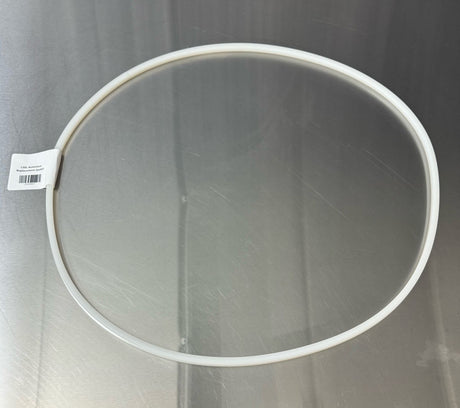
Gasket/Seal for 200L Commercial Autoclave Replacement
$7999Unit price /Unavailable-

150L Autoclave Replacement Heating Elements (Set of 3) - OEM Spec
$24999Unit price /Unavailable -
200L Autoclave Replacement Heating Elements (Pair) - OEM Spec
$29999Unit price /Unavailable





- 121°C / 250°FStandard cycle
- ~15 PSIWorking pressure
- 25Q – 1180LSizes stocked
- 110V & 220VPower options
- In stockReplacement gaskets
Why Commercial Mushroom Farms Use Autoclaves
A mushroom autoclave is a pressure vessel that holds saturated steam at roughly 121°C (250°F) and about 15 PSI long enough to kill bacteria, mold spores, and competing fungi. That is the difference between sterilization and pasteurization — and it is what supplemented grain and master’s mix require before inoculation.
Hobby growers get there with a pressure cooker. Once you are running more than a few bags a week, the limit is not whether the vessel works — it is how many cycles a day you can babysit. A commercial sterilizer replaces four or five small loads with one programmed run, which is where the labor savings actually come from.
What a Mushroom Autoclave Sterilizes
- Hydrated grain spawn bags and jars
- Master’s mix and supplemented hardwood substrate blocks
- Filled filter-patch grow bags
- Agar media, plates, and culture glassware
- Liquid culture jars and media
- Tools, inoculation gear, and lab consumables
Supplemented substrate must be sterilized, not pasteurized. Plain straw or manure can be pasteurized at 65–75°C. Anything carrying bran, soy hulls, or grain has enough nutrition to feed contaminants, so it needs a full pressure cycle at 121°C.
Choosing the Right Size Mushroom Autoclave
Size by the number of bags or blocks you need to clear per run, not by the biggest machine you can afford. An oversized chamber you only half-fill wastes energy and cycle time; an undersized one puts you right back into multiple runs a day.
| Sterilizer | Chamber | Best for | Typical load |
|---|---|---|---|
| Bonsai 25Q | ~24L benchtop, 110V | Labs, agar work, small spawn runs | A handful of quart jars or small bags |
| 150L Commercial | 150L vertical | First step into daily production | Multi-bag grain spawn and block runs |
| 200L Commercial | 200L vertical | Small farms running every day | Larger single-run batches |
| Blue Myco 310L / 550L / 1180L | 310L, 550L, or 1180L | Commercial farms and spawn labs | Palletized or cart-loaded block production |
Vertical chambers are the common choice where floor space is tight; larger horizontal systems are typical once you are loading carts. Before you commit to a size, confirm the electrical service at your site — the larger units are 220V and need a dedicated circuit.
Sterilizing Master’s Mix and Bulk Substrate
Master’s mix — hardwood fuel pellets and soy hulls at roughly 50/50 — is the standard gourmet block substrate, and it is nutritious enough that it will not survive pasteurization. A commercial substrate sterilizer lets you run a full day of blocks in one cycle instead of staging them through a 23-quart pot.
Load bags loosely so steam can circulate, leave the filter patches clear, and let the chamber depressurize on its own before opening. Cool to room temperature under still air or in front of a flow hood before you inoculate.
Autoclave or Pressure Cooker?
Both reach the same temperature and pressure. The difference is throughput, automation, and how much of your day it costs you.
- Stay with a pressure cooker if you are running a few jars or bags at a time and can be present for each cycle.
- Move to a commercial autoclave once sterilization is the bottleneck — when you are running back-to-back loads, need programmable cycles for repeatability, or want to load once and walk away.
Not there yet? Browse autoclaves and pressure cookers for the full range, including Presto and All American stovetop sterilizers.
Keep Your Sterilizer Running
The door gasket is the wear part on every one of these machines. A hardened or nicked seal is the usual reason a chamber stops holding pressure, and it is a ten-minute fix if you have a spare on the shelf.
Stock a spare gasket before you need one. Replacement hatch seals for the 150L and 200L sterilizers are listed in this collection, and the Bonsai 25Q gasket is available with the pressure cooker parts. Verify each load with sterilization indicator strips rather than assuming the cycle ran clean.
Build a Complete Production Workflow
Sterilization is one stage. These are the collections that feed it and follow it.
Who Uses Commercial Mushroom Autoclaves
- Gourmet mushroom farms producing fruiting blocks
- Spawn production labs and genetics suppliers
- Bulk substrate manufacturers
- Research and mycology laboratories
- Growers scaling past pressure-cooker capacity
- Wholesale mushroom supply companies
Frequently Asked Questions
What is a mushroom autoclave used for?
A mushroom autoclave sterilizes grain spawn, supplemented substrate blocks, agar media, liquid culture, and lab equipment with pressurized steam before inoculation. It destroys the bacteria, mold spores, and competing fungi that would otherwise outgrow your culture.
What temperature and pressure do mushroom autoclaves run at?
Standard mushroom sterilization runs at about 121°C (250°F) at roughly 15 PSI. Hold time depends on load size and density, with larger bags and denser substrate requiring longer cycles than small jars.
What size autoclave do I need for a mushroom farm?
Size by the number of bags or blocks you need to clear in a single run. A benchtop 25-quart unit suits lab and agar work, 150L to 200L vertical sterilizers cover small daily production, and 310L and larger chambers are built for commercial block and spawn output.
Can I sterilize master’s mix in an autoclave?
Yes. Master’s mix and other supplemented hardwood substrates must be sterilized rather than pasteurized, because the added nutrition will feed contaminants. Load bags loosely so steam circulates and keep filter patches clear.
Is a commercial autoclave better than a pressure cooker?
Both reach the same sterilizing temperature. A commercial autoclave is better once throughput is the constraint, because it processes far more per cycle and runs programmable cycles without supervision. For a few jars at a time, a pressure cooker is still the sensible tool.
What electrical service does a commercial autoclave need?
The benchtop 25-quart sterilizer runs on standard 110V. The larger commercial chambers require 220V service on a dedicated circuit, so confirm the available power at your facility before ordering.
How often should an autoclave gasket be replaced?
Replace the door gasket whenever it hardens, cracks, deforms, or the chamber stops holding pressure reliably. Frequency depends on how many cycles you run, so most production labs keep a spare seal on hand rather than waiting for a failure.