Lion's Mane Mushroom Grow Kit (5lbs)
Lion's Mane Mushroom Grow Kit (5lbs) is backordered and will ship as soon as it is back in stock.
Couldn't load pickup availability

Description
Description
This Lion's Mane mushroom grow kit is a 5 lb block already fully colonized with first-generation Hericium erinaceus mycelium. The hard part is finished before it reaches you. Cut the bag, mist twice a day, and cascading white clusters start forming on your counter — no sterile technique, no incubation, no equipment beyond the mister in the box.

A 5 lb block already colonized with Lion's Mane. Cut the bag, mist twice a day, and harvest white, seafood-textured clusters from your counter.
It is the kit we recommend to first-time growers more than any other, and it is the best-selling kit we make. Lion's Mane fruits readily at ordinary room temperature, tolerates beginner mistakes better than most gourmet species, and delivers a genuinely useful harvest — a crab-and-lobster texture that holds up to a hot pan.
- 5 lbsColonized block
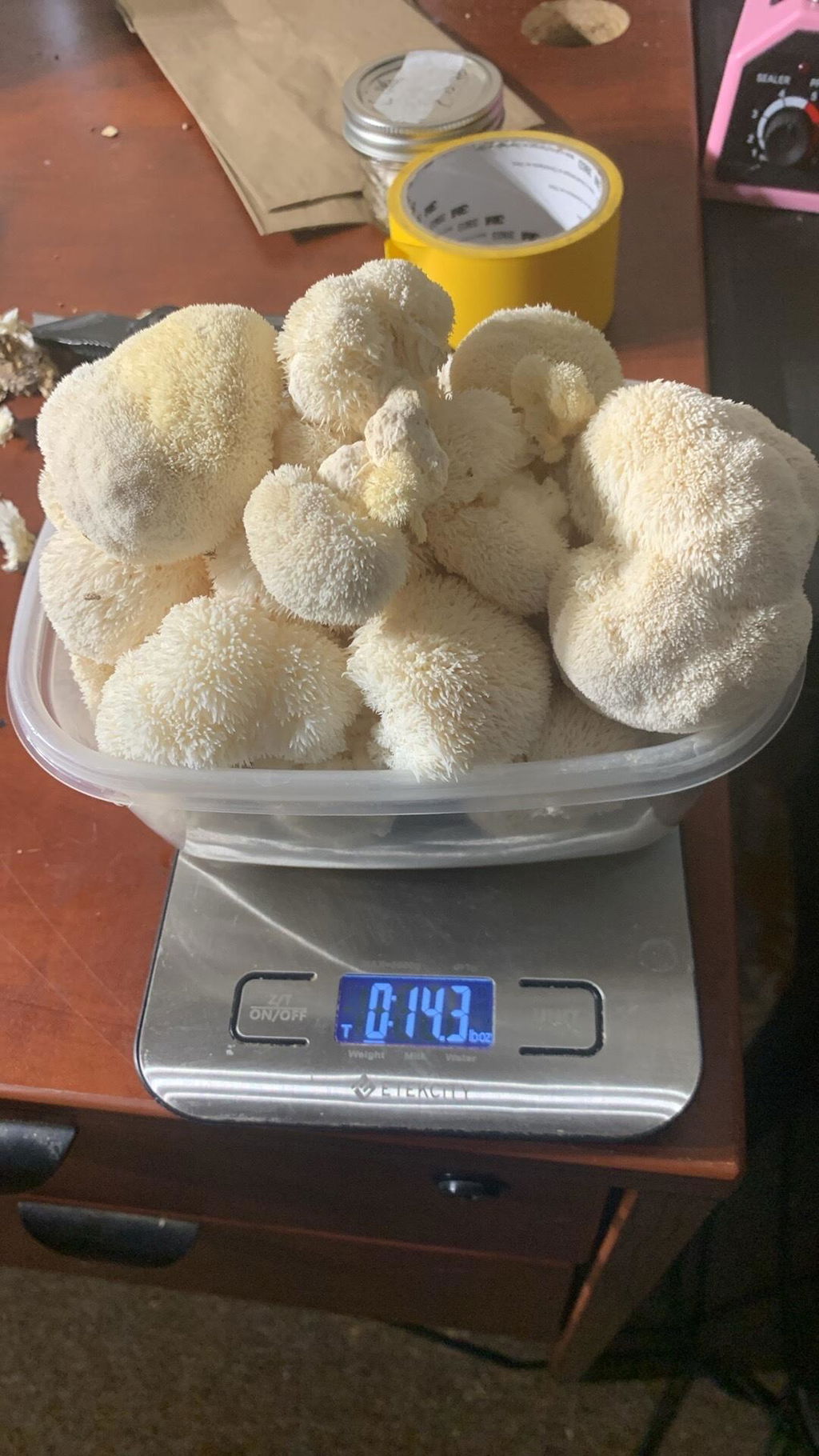
- 2.5–3 lbsTypical yield
- 64–78°FFruiting temp
- 4–6 wksFlush window
- BeginnerSkill level
Why growers pick Lion's Mane

Fruits at ordinary room temperature and shrugs off temperature swings and irregular misting better than most gourmet species.

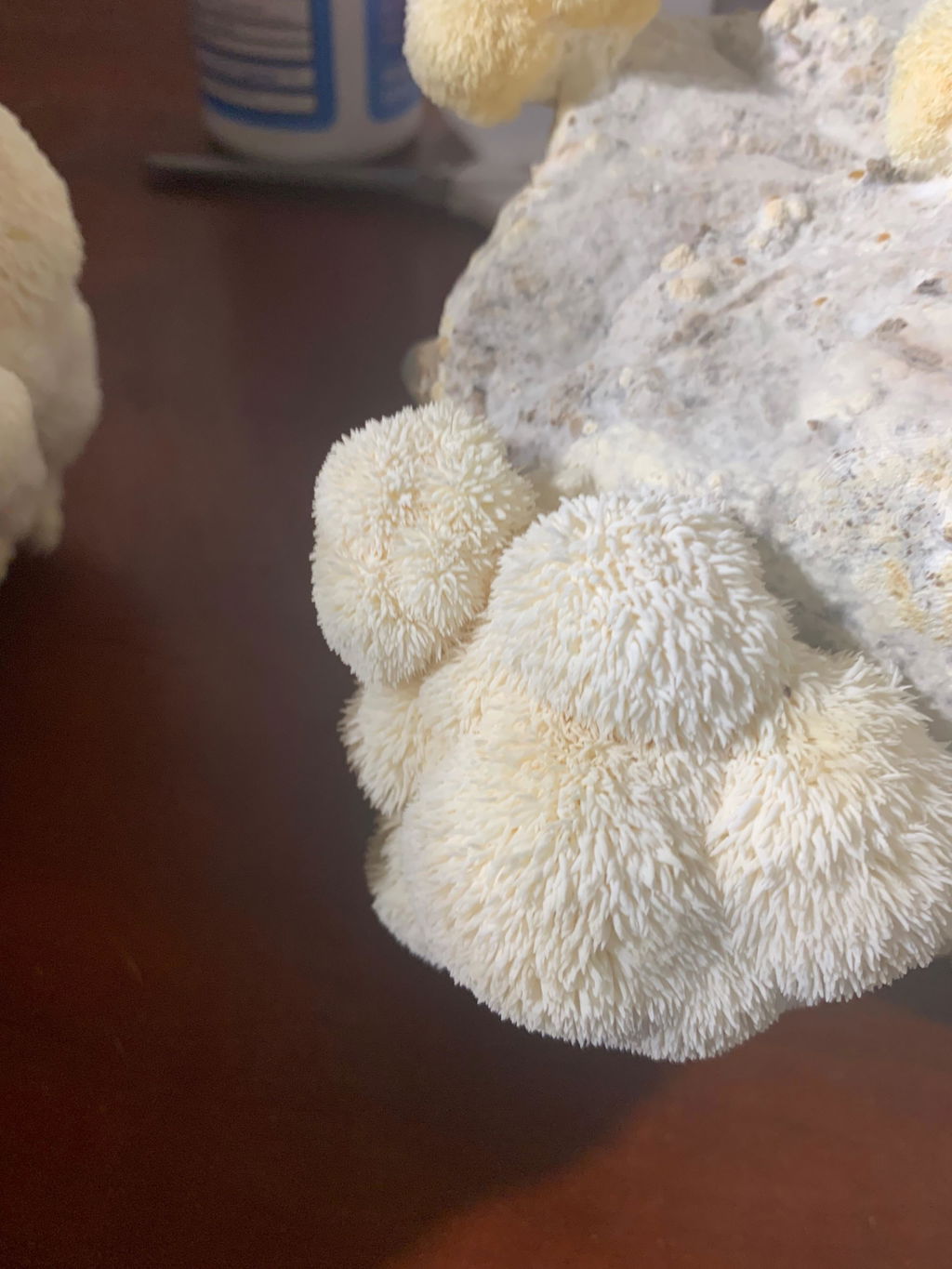
It forms flowing white spines instead of a cap and gills, so nothing drops spores across your kitchen, and you can see at a glance when it is ready.

Torn into strips and dry-seared, it turns sweet and faintly briny with a shredded-crab texture that holds up to a hot pan.
What comes in the kit
- 5 lb pre-colonized fruiting block with first-generation Lion's Mane genetics
- Ultra-fine pump mister for daily watering
- Printed step-by-step growing instructions
How a spray-and-grow kit works
The short versionEverything difficult about mushroom cultivation — sterilization, inoculation, colonization — already happened before this block shipped. Your job is to trigger fruiting and keep the surface from drying out.
 1Cut the bag
Make a single slit across the face of the block. The shift from still air to fresh air tells the mycelium to start fruiting.
 2Mist 1–2× a day
Light passes over the cut face with the included mister. Keep the surface from drying out without soaking it; standing water invites bacteria.
 3Give it indirect light
Roughly 12 hours a day. Room light or a north-facing windowsill is plenty — light tells the mushrooms where to point; it is not food.
 4Harvest, then rest
Twist and pull the whole cluster while the spines are short and white. Stop misting for a week, then resume for the next flush.
The most common beginner mistake: harvesting too late. Lion's Mane goes from firm white pom-pom to shaggy, yellowing, and slightly bitter faster than people expect. If the spines have lengthened past about half an inch and the surface is turning cream or tan, pick it that day.
Know when to harvest
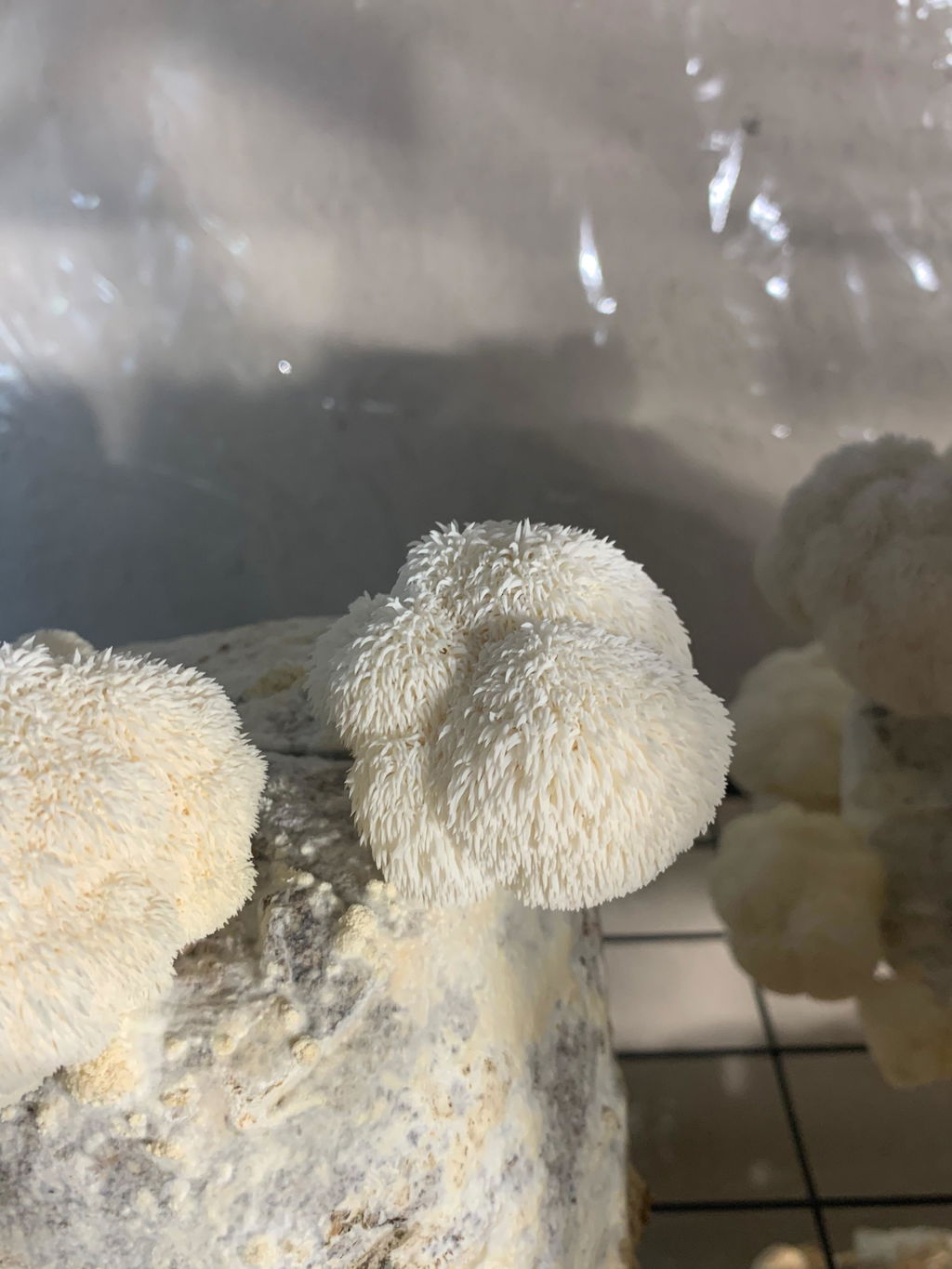
 Bright white with short spines: ready to pick
The harvest window is the one thing Lion's Mane is picky about. Pick the whole cluster while it is firm and bright white, before the spines lengthen and the color turns.
- Bright white, short spines: pick now
- Spines past ½ inch or turning cream: pick today
- Rest the block a week, then mist again
A portable humidity tent holds moisture around the block so you mist less often and get fuller clusters.
It matters most when forced-air heat drops indoor humidity below about 40%.
Going furtherOnce you have fruited this block, the same species can be grown at any scale from grain spawn or your own liquid culture. Our complete guide to growing Lion's Mane covers substrate recipes, colonization and fruiting parameters, harvest timing, and how to fix the coral-shaped growth that catches most people out.
Growing specifications
| Specification | Detail |
|---|---|
| Species | Hericium erinaceus (Lion's Mane, Hedgehog Mushroom, Pom Pom) |
| Block weight | 5 lbs, fully colonized |
| Expected yield | 2.5–3 lbs wet weight across all flushes |
| Fruiting temperature | 64–78°F |
| Light | 12 hours indirect light per day |
| Humidity method | Mist cut face 1–2× daily |
| Flushes | Multiple, over a 4–6 week window |
| Skill level | Beginner — no sterile technique required |
Appearance, flavor, and cooking
Lion's Mane sits in an unusual spot: it is one of the easiest gourmet mushrooms to fruit and one of the most interesting to eat. It forms a single dense white cluster of downward-flowing spines rather than a cap and stem, so there is no ambiguity about when it is ready and no gills to drop spores across your kitchen.
In the pan it behaves like seafood. Torn into strips, dry-seared until the moisture cooks off, then finished in butter, it develops a sweet, faintly briny flavor and a shredded crab texture that most substitutes never reach. Crab cakes, rolls, and chowders are where it shines. It is also the species most associated with cognitive and nerve-related research in functional mushroom literature, which is why it turns up in supplement aisles as often as it does in restaurant kitchens.
Grow more Lion's Mane
 Lion's Mane Grow KitThis product
 Lion's Mane Grain SpawnScale up to bulk
 Lion's Mane LC SyringeStart from culture
 Humidity TentHolds moisture in
| Grow Kit | Grain Spawn | LC Syringe | Humidity Tent | |
|---|---|---|---|---|
| Use it for | Mushrooms on the counter | Scaling up to bulk | Starting your own grain | Holding humidity around a block |
| What it is | 5 lb colonized fruiting block | 5 lb colonized grain | 10cc liquid culture | Portable fruiting tent |
| Step | Fruit | Spawn to substrate | Inoculate grain | Fruit |
| Pairs with | Humidity tent | Fruiting blocks or bulk substrate | Sterile grain bags or jars | This grow kit |
Common questions
How long until my Lion's Mane grow kit starts fruiting?
Small white knots usually appear on the cut face within the first one to two weeks, then bulk up quickly over the following several days. Cooler rooms slow this down; a spot in the 68–75°F range moves fastest. If nothing has formed after three weeks, the block is almost always too dry — increase misting frequency rather than misting more heavily.
Do I need a humidity tent or a special chamber?
No. The kit is designed to fruit in open room air with daily misting, which is the whole point of a spray-and-grow block. That said, dry winter air with forced-air heat makes the job harder, and a tent holds humidity around the block so you mist less often and get fuller clusters. If your home runs below about 40% relative humidity, it is worth adding a portable humidity tent.
How many harvests will one kit give me?
Most blocks produce two to three flushes across a 4–6 week window, totaling roughly 2.5–3 lbs wet weight. The first flush is typically the largest by a wide margin. After harvesting, pause misting for about a week to let the mycelium recover, then resume — the block is rebuilding reserves during that rest, and pushing it early usually costs you the next flush.
My mushroom has long, stringy spines and is turning yellow. What happened?
It matured past its window. Elongated spines and a yellow or tan cast mean the fruit is past peak — it is still edible but turns bitter and loses the firm texture. Harvest earlier next flush, while the cluster is bright white and the spines are short. Yellowing paired with a wet, slimy surface is different: that is too much standing water, so ease off the misting.
Can I grow this outdoors or does it have to be inside?
Indoors is strongly preferred. The block needs consistent temperature and protection from wind, direct sun, and insects — fungus gnats in particular will find an exposed block quickly. A kitchen counter, bathroom shelf, or any spot out of direct sunlight works well. A shaded covered porch can work in mild weather, but yields are less predictable.
What's the difference between this and a Lion's Mane grain spawn bag?
This kit is a finished fruiting block — it is ready to produce mushrooms and nothing else is required. A grain spawn bag is an ingredient: colonized grain you mix into bulk substrate to start a much larger grow, typically a monotub or a batch of fruiting blocks. If you want mushrooms on the counter, take the kit. If you are scaling up production, start with our pre-colonized grain spawn bags instead — our complete guide to growing Lion's Mane walks through both routes step by step.
Our Growing Experts Recommend
Products our growers commonly use with this item