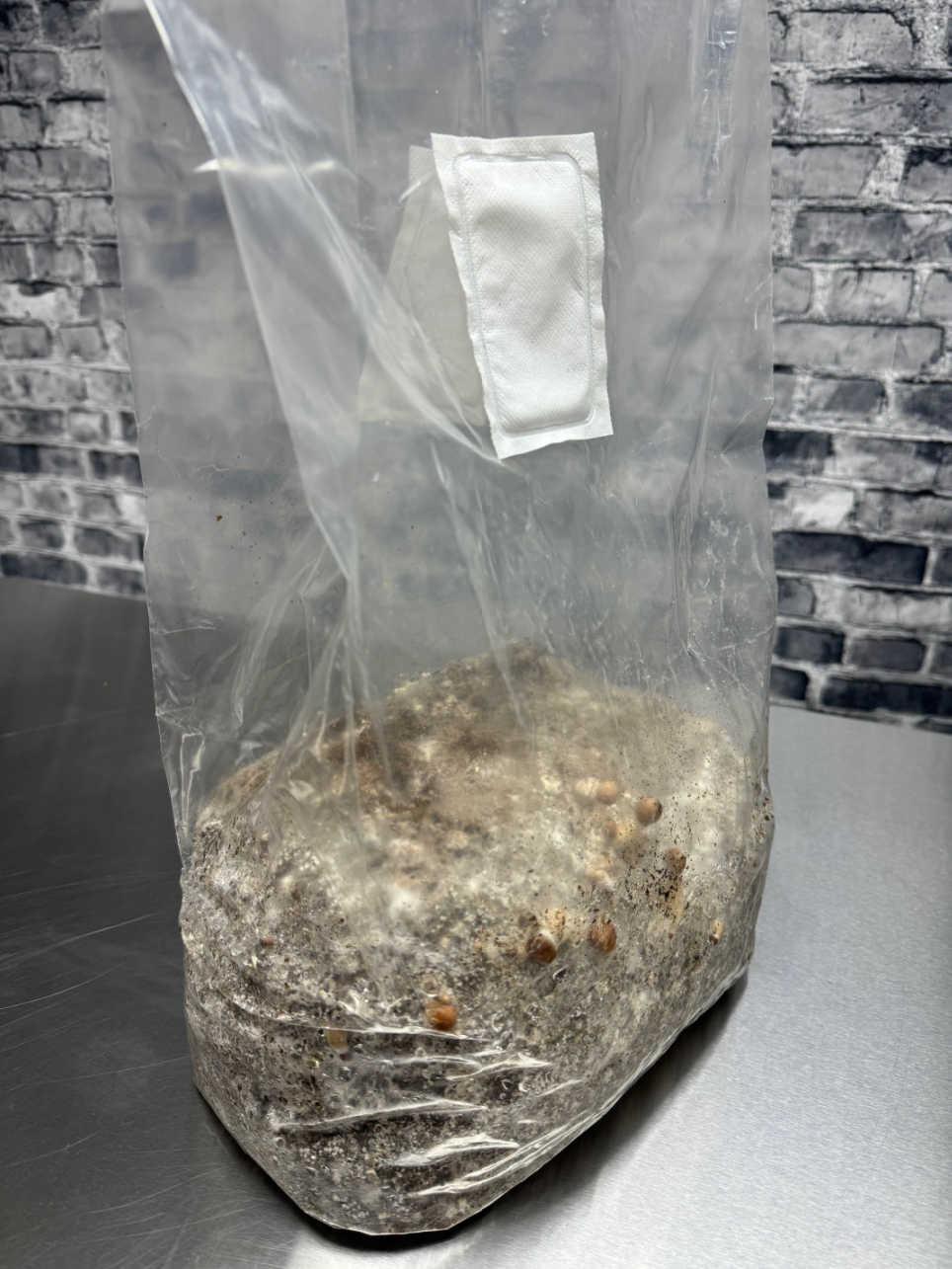
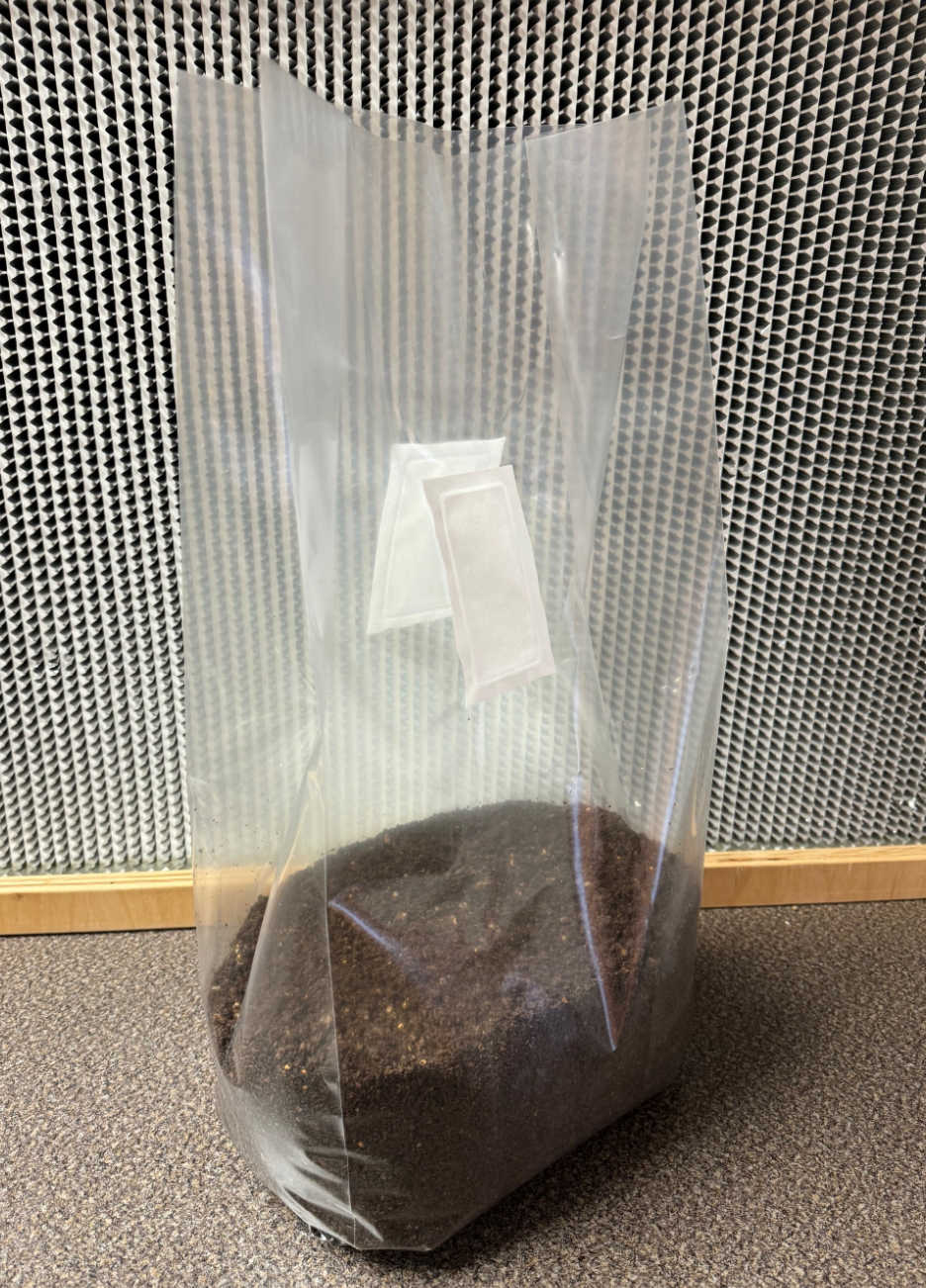
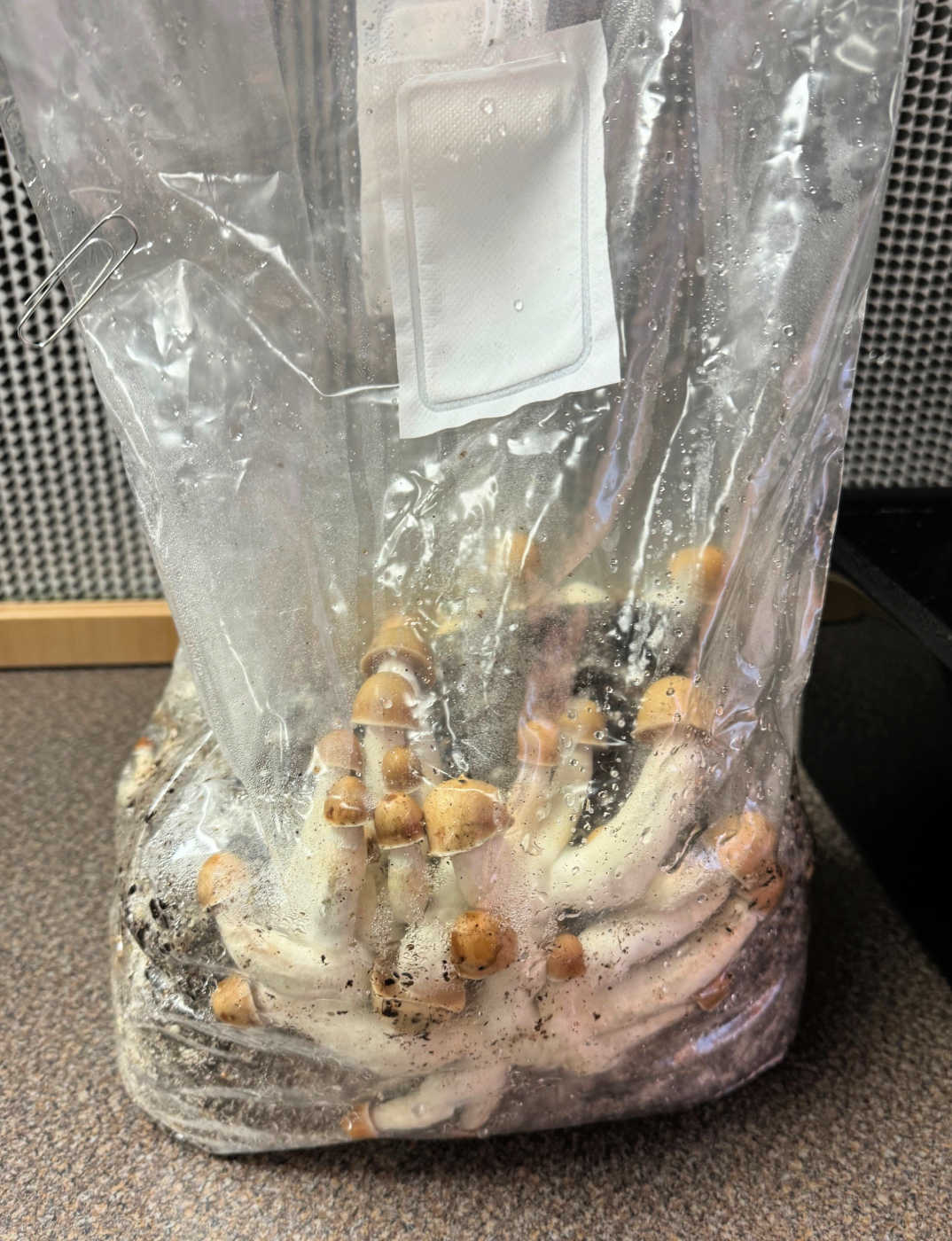
Blue Myco XLS Double Patch Fruiting Bags (50-Pack)
Blue Myco XLS Double Patch Fruiting Bags (50-Pack) is backordered and will ship as soon as it is back in stock.
Couldn't load pickup availability
Description
Description
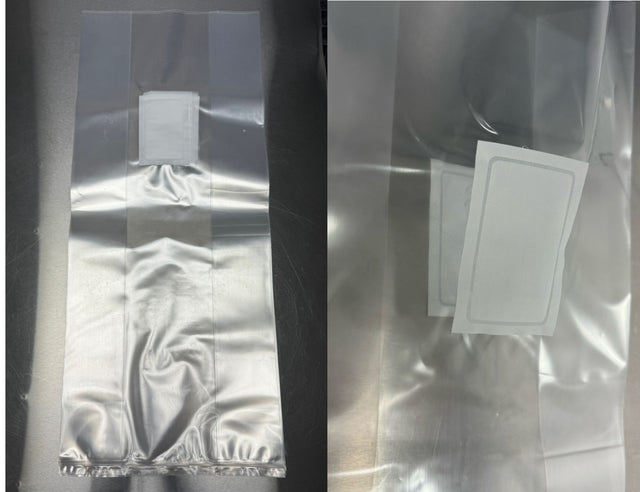
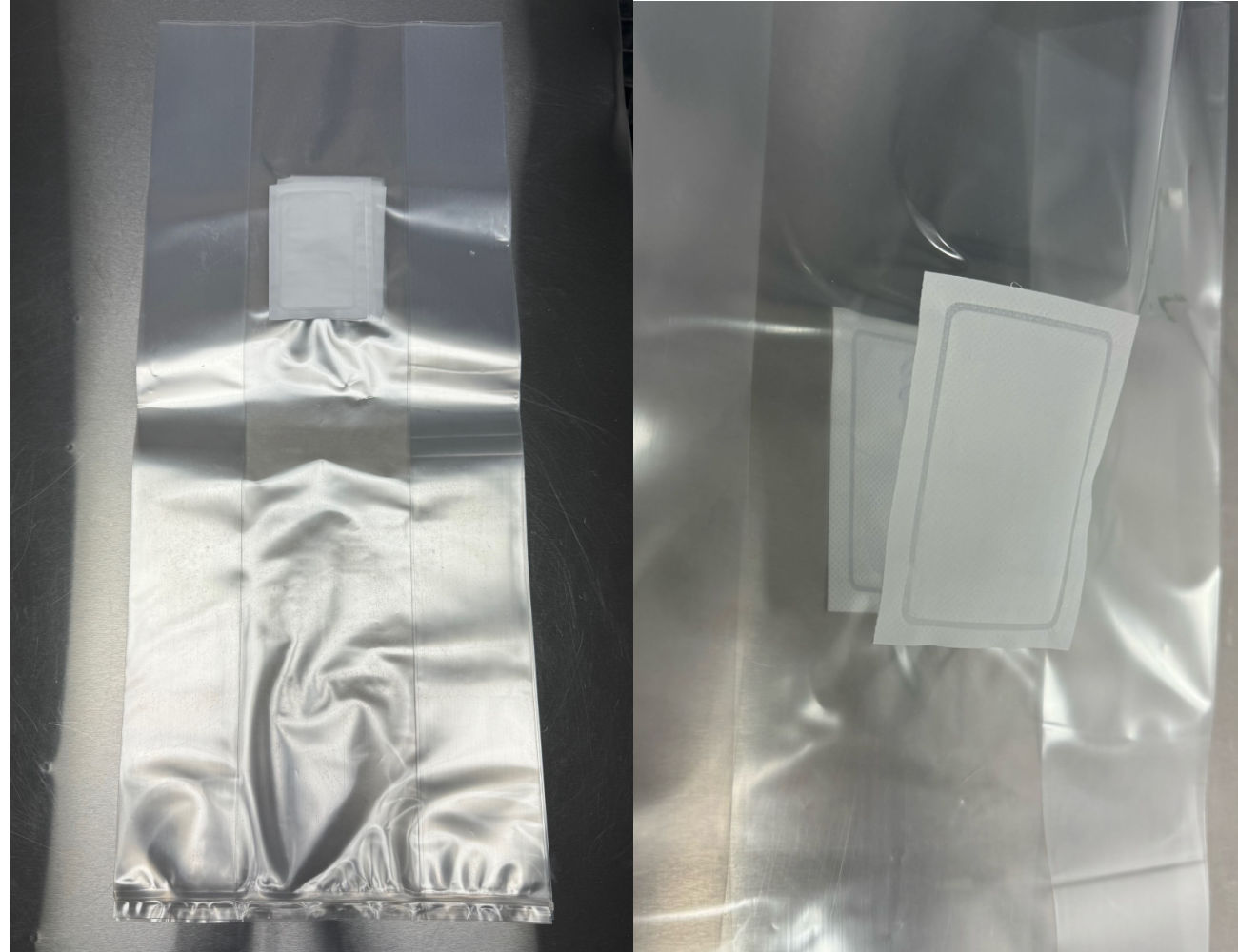
Blue Myco XLS Double Patch Fruiting Bags pair a 10" x 5.5" x 24" block with two 3.8" x 3.8" filter patches at 0.5 microns. That's roughly 29 square inches of filter per bag — the air exchange a large block needs once it starts fruiting.
- 10"×5.5"×24"gusseted
- Two patches3.8"×3.8" each
- 0.5 micronfilter rating
- 3.0 mil80µm film
- 50 bagsper pack

Sized for the block, not just the bag
Scaling a fruiting bag means scaling its filtration with it. The patches here are 3.8" square — each one covering more than six times the area of the 1.5" patch used on standard bags, and the two together give this bag by far the most filter area in our lineup.
At 0.5 microns the rating is deliberately more open than the 0.2 and 0.22 micron patches on grain bags. Fruiting bodies burn oxygen and throw off CO2; far faster than colonizing mycelium, and a colonization-spec filter chokes a fruiting block. The trade is that a more open filter is a less restrictive barrier — which is why these are the right bag for fruiting and the wrong one for long sealed grain runs.
How to run a fruiting bag
- Fill with substrate, keeping both patches clear.
- Fold the top and clip it — don't heat-seal before sterilizing, since the bag needs to vent.
- Pressure sterilize. A large, dense block needs a longer cycle than a small bag does.
- Cool completely to room temperature, then inoculate with grain spawn and seal.
- Let the block colonize fully, then cut the bag to introduce fruiting conditions and fruit directly out of it.
Specifications
| Spec | Detail |
|---|---|
| Brand | Blue Myco Systems |
| Type | Double patch fruiting bag |
| Dimensions | 10" x 5.5" x 24", side gusseted |
| Material | 3.0 mil (80 µm) polypropylene |
| Filters | Two 3.8" x 3.8" patches, 0.5 micron |
| Pack size | 50 bags |
| SKU | BMLX |
Fruiting bag or spawn bag?
The filter decides the job. Here are both fruiting bags next to the grain bags in the same sizes.
| Bag | Size | Filters | Built for | Pack |
|---|---|---|---|---|
| XLS Double Patch (this bag) | 10" x 5.5" x 24" | Two 0.5 micron, 3.8" x 3.8" | Fruiting in the bag | 50 |
| Medium Double Patch | 5" x 4" x 19" | Two 0.5 micron, 1.5" x 1.5" | Fruiting in the bag | 50 |
| Blue Myco XLS-T | 10" x 5.5" x 24" | One 0.22 micron, 2" x 4" | Grain or substrate | 50 |
| Blue Myco Medium 10T | 5" x 4" x 19" | One 0.22 micron, 1.5" x 1.5" | Grain spawn | 100 |
Rule of thumb: if the block leaves the bag before it fruits, use a spawn bag. If the block fruits while it's still in the bag, use a double patch fruiting bag.
Frequently asked questions
How is this different from the XLS-T spawn bag?
Same 10 by 5.5 by 24 inch size, different filtration. The XLS-T has a single 0.22 micron patch and is built for colonizing grain or substrate. This bag has two 0.5 micron patches for the much higher air exchange a fruiting block needs.
Can I use these for grain spawn?
You can, but they are not the best tool for it. Two large 0.5 micron patches move far more air than a grain bag needs, and a more open filter is a less restrictive barrier over the weeks a grain bag sits sealed. For grain, use a single patch spawn bag.
Should I use the XLS or the medium double patch?
Pick by block size. The medium is 5 by 4 by 19 inches and holds 3 to 4 pounds of substrate. The XLS is 10 by 5.5 by 24 with much larger patches, for growers running big blocks.
Do I cut the bag open to fruit?
Yes. Let the block colonize fully while sealed, then cut the bag to expose the surface and introduce fruiting conditions. The patches handle gas exchange during colonization, and the cut does the rest once you are fruiting.
Does a large block need a longer sterilization cycle?
Generally yes. Heat has to reach the center of the load, and a large dense block takes longer to get there than a small bag does. Extend the cycle rather than assuming the same timing you use for medium bags.
Our Growing Experts Recommend
Products our growers commonly use with this item