


 $10.00 off
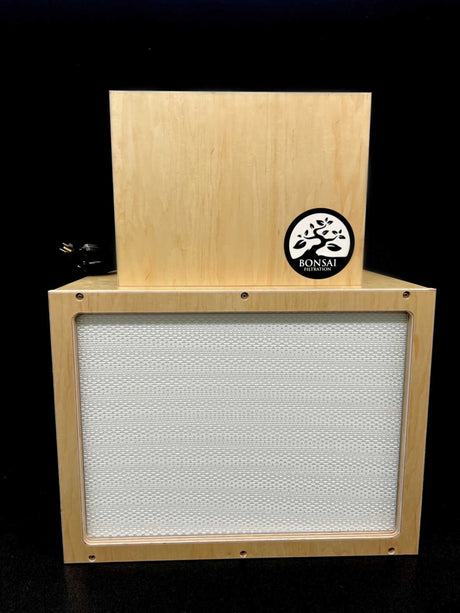
Bonsai 99.99% HEPA Horizontal Laminar Flow Hood - Natural Clear Coat Finish
$33999$34999Unit price /Unavailable
 $30.00 off
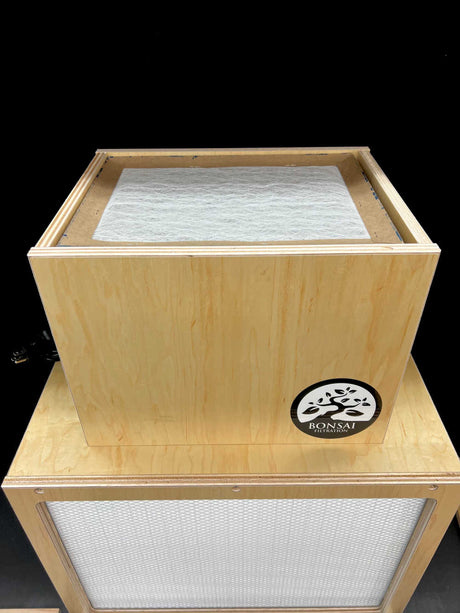
Bonsai 99.99% HEPA Laminar Flow Hood Clear Coat + Extra Filter Bundle
$35999$38999Unit price /Unavailable $30.00 off
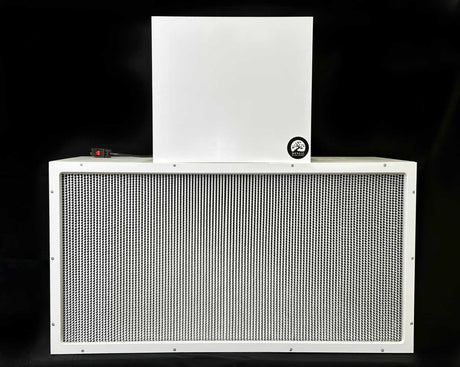
Bonsai XL 24" X 18" 99.99% HEPA Horizontal Laminar Flow Hood - Version 2.0
$84999$87999Unit price /Unavailable
 Up to $520.00 off
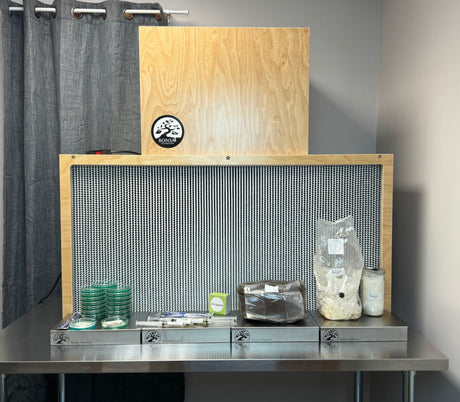
Bonsai Commercial Series 48" X 24" 99.99% HEPA Horizontal Laminar Flow Hood 4'x2'
From $1,47900$1,99900Unit price /Unavailable
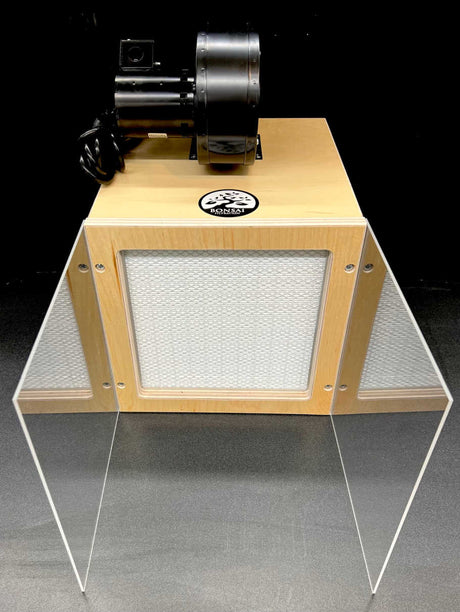
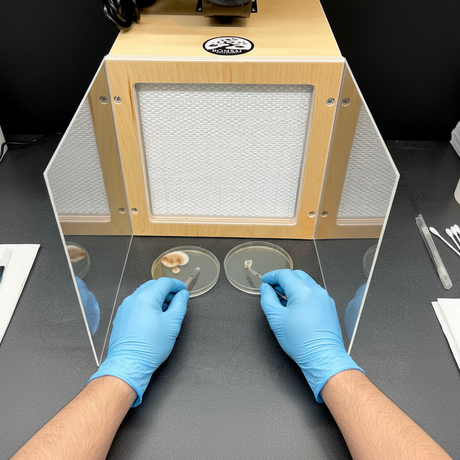
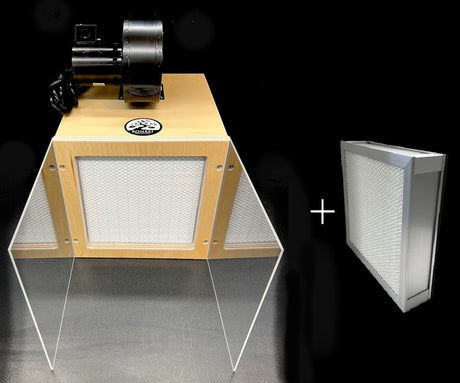
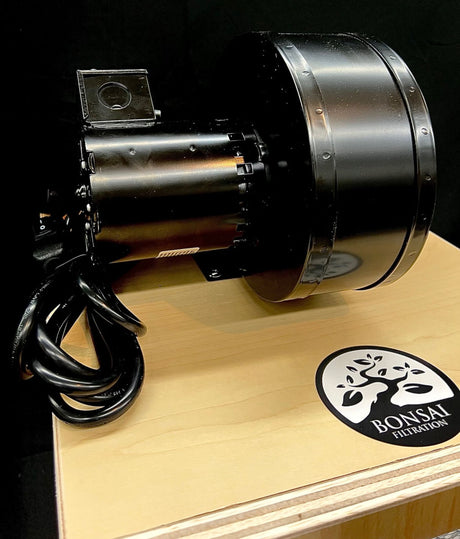
Which Bonsai Flow Hood Is Right for You?
Choosing a flow hood comes down to one question: how much work surface do you actually need? Going bigger than you need wastes filter life and electricity; going smaller cramps your workflow and makes complex procedures harder than they should be. Here is how each size matches up to real cultivation use cases.
Bonsai 12 inch — The Entry-Level Workhorse
Best for: First-time flow hood buyers, hobbyists upgrading from a still air box, small-scale grows.
The 12 inch Bonsai gives you true laminar flow at the smallest possible footprint. Big enough to inoculate jars, work with one or two agar plates at a time, and inject all-in-one bags. The vast majority of hobbyist cultivation work fits comfortably inside this hood.
If you have been doing inoculation in an SAB and are ready to upgrade to a real flow hood without committing to a full benchtop unit, this is the one.
Bonsai 18 x 24 inch — The Sweet Spot
Best for: Serious hobbyists running multiple grows, anyone doing extensive agar work, growers who want room to spread out.
The 18 x 24 inch gives you enough work surface to lay out multiple agar plates, run grain-to-grain transfers, and work through a full inoculation session without rearranging your supplies every two minutes. It is the size most experienced growers eventually settle on as their daily driver.
If you are past your first few grows and starting to do more advanced work, such as isolating cultures, banking genetics on slants, or running multiple species simultaneously, this is the right tool.
Bonsai 24 x 48 inch Commercial Series — Production-Scale
Best for: Commercial growers, small labs, anyone running production-volume inoculation, two-person workstations.
The 24 x 48 inch Commercial Series is purpose-built for production work. Double the surface area of the 18 x 24 inch model: wide enough for two people to work side-by-side, deep enough for full-scale agar work, and engineered for the higher airflow volume that a larger filter face requires. This is the hood for serious operations: small mushroom farms, commercial mycology labs, or anyone scaling beyond hobbyist quantities.
How to size your flow hood
- First flow hood, working with bags and a few jars? Bonsai 12 inch.
- Doing agar work and running multiple grows? Bonsai 18 x 24 inch.
- Two people working at once, or production volume? Bonsai 24 x 48 inch Commercial.
- Tight budget but want the highest contamination control possible? The Bonsai 12 inch beats any FFU or SAB combination at the price point.
What is the same across every Bonsai flow hood
Every size in this lineup shares the same build standard:
- Made in the USA at our Illinois facility by the Bonsai division. Not imported, not rebranded.
- H14 HEPA filters. 99.99 percent efficient at 0.3 microns, one step above the H13 in most consumer flow hoods.
- Horizontal laminar airflow. Air flows toward you across the work surface, blocking airborne contaminants from drifting in.
- 1/2 inch pre-finished cabinet-grade plywood. Durable, wipeable, does not shed particulates the way raw wood does.
- Lab-tested to US laminar flow specifications. Every unit verified for true unidirectional flow before it ships.
- 3-year motor warranty. The longest in home cultivation.
Replacement HEPA filters
HEPA filters are consumables. They gradually load with particulates over time and need replacement every 12 to 24 months in typical home use, or every 6 to 12 months in heavy-use environments. Replacement filters sized for every Bonsai flow hood are available right in this collection. Keeping a spare on hand means you are never down for an order to arrive when contamination starts creeping back in.
Frequently Asked Questions About Laminar Flow Hoods
What makes a flow hood laminar?
Laminar flow means the HEPA-filtered air moves in smooth, parallel streams, not turbulent eddies. That smooth flow is what physically blocks airborne contaminants from drifting into your work surface. A fan filter unit produces clean air, but the flow is turbulent, so contamination can still enter the work area. Laminar flow is the actual defining feature of a real flow hood, and it is why a true LFH outperforms an FFU for inoculation.
What size flow hood should I buy?
For most first-time buyers, the Bonsai 12 inch covers everything a hobbyist does: bag inoculation, jar work, basic agar. The Bonsai 18 x 24 inch is the sweet spot for serious hobbyists running multiple grows or doing extensive agar work. The 24 x 48 inch Commercial is for production environments or two-person work. Match the hood to your actual workflow. Bigger is not always better.
What is the difference between horizontal and vertical laminar flow?
Horizontal flow (what every Bonsai hood produces) pushes air toward you across the work surface. It is ideal for mushroom cultivation because it carries contaminants away from your work and lets you keep tall items (jars, slants, agar plates) anywhere on the surface without disrupting flow. Vertical flow pushes air down from the top and is used in some lab applications, but for mushroom work, horizontal is the right choice.
What is an H14 HEPA filter?
H14 is the European EN1822 HEPA classification for filters that capture 99.99 percent of particles at 0.3 microns. That is one efficiency step above the H13 (99.95 percent) that ships in most consumer flow hoods. The difference matters for mushroom cultivation because common mold spores fall right in the size range where H14 outperforms H13.
How loud is a flow hood?
Bonsai flow hoods produce a steady, consistent fan hum, comparable to a window AC unit or a kitchen range hood on medium. Not silent, but not disruptive. The 24 x 48 inch Commercial is slightly louder than the smaller hoods due to the larger filter face and higher airflow requirements.
How long do HEPA filters last?
Typical home cultivation use: 12 to 24 months. Commercial or heavy-use environments: 6 to 12 months. The filter does not fail dramatically. Efficiency gradually drops as it loads with particulates. If your hood feels weaker or contamination rates climb, it is time to replace the filter. Replacements for every Bonsai size are available right in this collection.
Do I need to warm up my flow hood before working?
Yes. Run the hood for 15 to 30 minutes before starting work to fully clear the air inside the cabinet and stabilize the airflow. This is also a good time to wipe down the work surface with 70 percent isopropyl alcohol and lay out your supplies.
Where should I place my flow hood?
Anywhere relatively clean and dust-free works: a basement, garage, spare room, or dedicated grow area. Avoid placement near furnaces, AC vents, open windows, or high-traffic areas where dust gets stirred up. The hood will clean the air immediately around your work, but starting with a clean room significantly extends filter life.
What does the 3-year motor warranty cover?
The warranty covers the motor against manufacturing defects and premature failure under normal use for three years from purchase. HEPA filters are consumables and not covered. They are expected to be replaced periodically as part of normal operation.
Can I plug a flow hood into a standard outlet?
Yes. Every Bonsai flow hood runs on standard 110V household power. No special wiring or outlets required. Most growers run their hood off the same outlet as other grow room equipment without issue.