


 $23.01 off
Midwest's Select Bulk Substrate Casing Mix - 30 Pounds (BULK 6-PACK)
$8499$10800Unit price /Unavailable $1.50 off
 $7.00 off
 $5.00 off
-
 $3.00 off
 $7.00 off
 $22.01 off
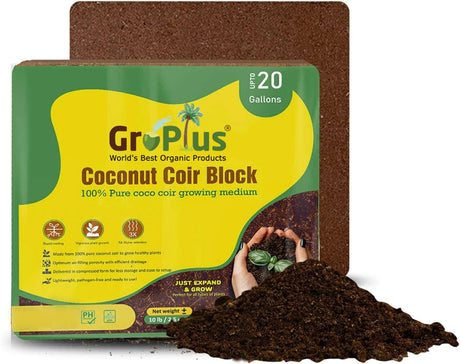
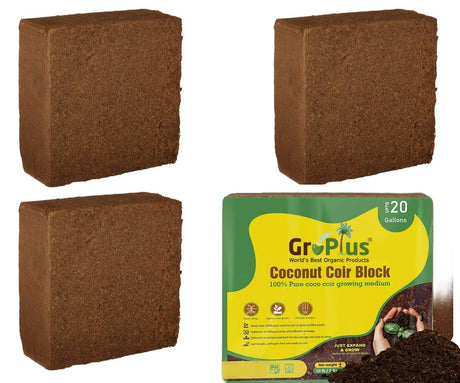
Coco Coir Brick (4-Pack) Gro-Plus 5kg Premium 10 Pound Coir Block Bundle
$5999$8200Unit price /Unavailable-
Willy's Blend - Willy Myco's Official Premium Imported Manure-Based Substrate - 5 lbs
$2999Unit price /Unavailable -
$27.01 off
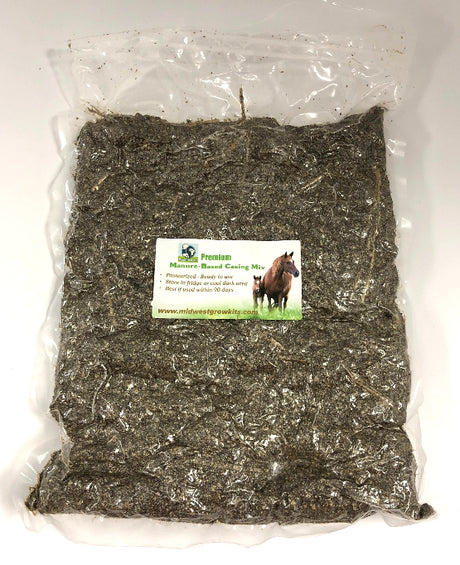
Midwest's Black Cow Manure Substrate & Casing Mix - 30 Pounds (BULK 6-PACK)
$9799$12500Unit price /Unavailable
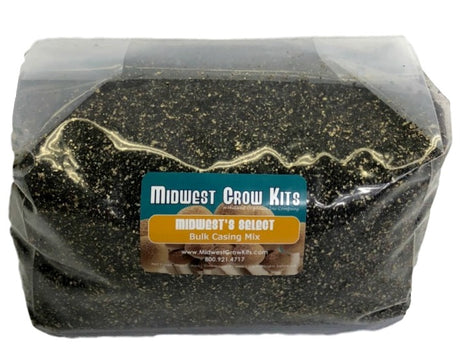
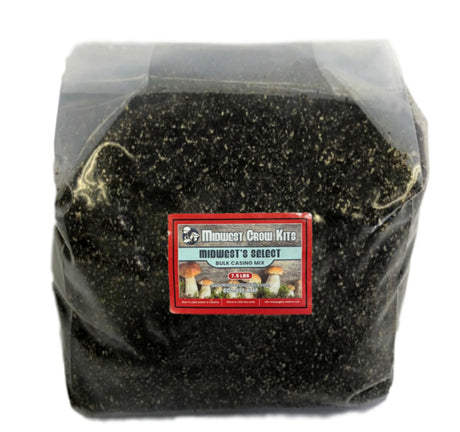




Start Here: Midwest's Select Bulk Substrate
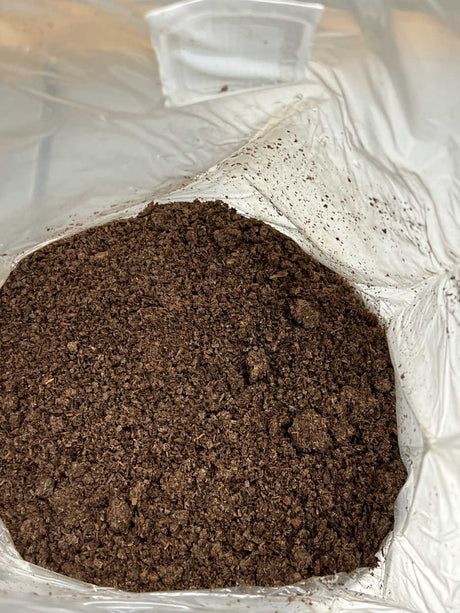
If you're new to bulk growing and unsure which substrate to buy, start with Midwest's Select Bulk Substrate. It's our flagship CVG (coco coir, vermiculite, gypsum, plus a touch of azomite for micronutrients), and we've sold over 100,000 bags since we launched it in 2012. It's the proven default for the majority of bulk grows.
Why CVG is the right starting point for most growers
There's a common beginner misconception worth clearing up: "manure-loving mushrooms" don't actually require manure in their substrate. The species name refers to where they grow wild — on animal dung in pastures — but in cultivation, they fruit beautifully on a properly pasteurized CVG (coco coir, vermiculite, gypsum) substrate with no manure at all.
CVG actually has a significant advantage for newer growers: lower contamination risk. Manure introduces complexity to the substrate — it's nutrient-rich, it can harbor heat-resistant bacteria, and it's harder to consistently pasteurize. CVG is cleaner, more predictable, and forgives more beginner mistakes. Many experienced commercial growers run CVG exclusively for exactly this reason.
Once you've got a few successful CVG grows under your belt, you can experiment with manure-based blends like our Willy's Blend or Black Cow to compare yields and dial in your preferences. But for your first few grows, the simplicity and reliability of CVG is the smart bet.
Get the right size for your monotub
- 5 lb bag — sized for the 28Q small monotub (use the whole bag with one spawn bag)
- 7.5 lb bag — sized for the 44Q medium monotub (use the whole bag with one spawn bag)
- 30 lb 6-pack — sized for the 66Q large monotub (use two bags) or for running multiple tubs at once at a per-bag discount
Which Substrate Is Right for Your Mushrooms?
Once you understand the basics from the section above, here's how to navigate the full lineup. The single most important substrate decision is matching the substrate type to the species you're growing. Different mushrooms have evolved to eat different things, and putting the wrong substrate under your spawn is the most common reason a bulk grow underperforms.
Manure-Based Substrates — For the Most Common Species
Best for: The vast majority of cultivated mushroom species — the ones that naturally grow on cow, horse, or other animal dung in the wild.
Manure-based substrates use CVG (coco coir, vermiculite, gypsum) as a base, often blended with composted manure for added nutrients. Both pure CVG and manure-containing blends work for these species; pure CVG is simpler and safer, while manure-containing blends offer potential yield benefits for experienced growers willing to manage the added contamination risk.
Our flagship is Midwest's Select Bulk Substrate (pure CVG), with over 100,000 bags sold since 2012. For growers who want the manure boost, Willy's Blend and Black Cow are the premium options.
Wood-Based Substrates — For Gourmet & Functional Species
Best for: Lion's mane, shiitake, oyster varieties, king trumpet, reishi, and other wood-loving gourmet mushrooms.
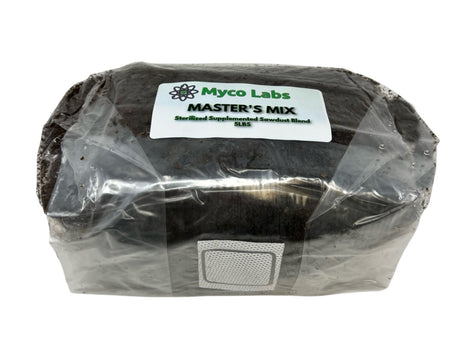
Wood-loving species can't colonize manure-based substrates effectively. They need a hardwood-based medium — typically Master's Mix, a 50/50 blend of hardwood pellets and soy hulls that gets sterilized (not pasteurized) at high temperature to kill all microbes, since the nutrient-dense formula is too rich for pasteurization alone.
Specialty Substrate Kits — Complete Solutions
Best for: Growers who want everything in one box — substrate, spawn, tub, and supplies.
Our specialty kits bundle substrate with the rest of what you need for a successful bulk grow. The Grass Lover's Kits in particular are designed for the techniques popularized by content creator GordoTek and his subscribers, using our unique aged-manure-and-straw blend for species like Panaeolus cyanescens.
How to Use Bulk Substrate in a Monotub Grow
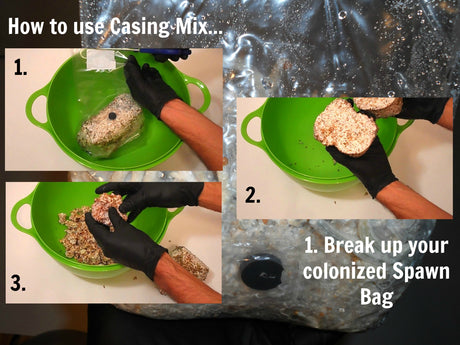
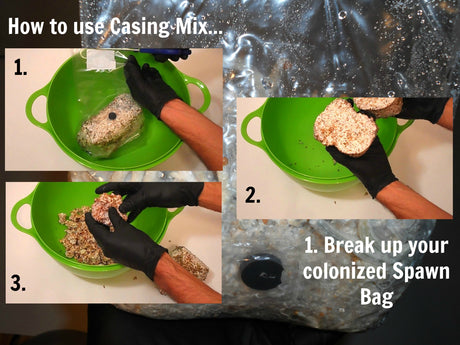
Once you have the right substrate for your species, the bulk grow process is straightforward. The basic workflow:
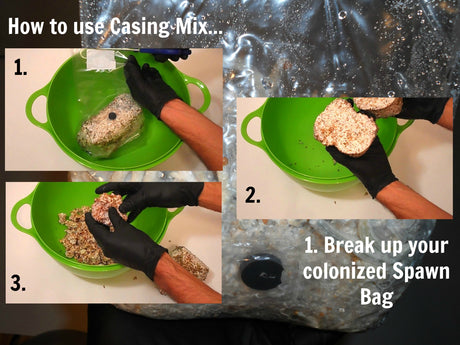
- Mix your colonized grain spawn with your bulk substrate at roughly a 1:3 ratio
- Pack the mixed spawn-and-substrate into a clean monotub
- Colonize at room temperature with the air holes sealed (typically 7 to 14 days)
- Fruit by opening the air holes and introducing light and fresh air exchange
- Harvest when the mushrooms are mature, then mist for the next flush
Want the full walkthrough? Our Step-by-Step Bulk Monotub Grow Guide covers every step in detail with photos — from prepping your tub through harvesting multiple flushes. It's the quick-start version of the complete instructional materials customers receive after checkout, and the best starting point if you're new to bulk growing.
How much substrate do I need for my monotub?
Substrate quantity depends on tub size and works in tandem with the grain spawn you mix in. Our recommended ratios:
- 28Q small monotub: 4 lbs of bulk substrate (paired with one spawn bag), or use a 32oz grain jar with no extra substrate needed
- 44Q medium monotub: 7.5 lbs of bulk substrate paired with one spawn bag (2.25 to 2.5 lbs)
- 66Q large monotub: 10 lbs of bulk substrate paired with two spawn bags (5 lbs total)
These amounts produce the optimal grain-to-substrate ratio (roughly 1:3) for the volume of each tub.
How our substrate is different
Substrate is one of those products where small differences in formulation and processing add up to big differences in performance. Here's what sets ours apart:
- Made fresh daily in-house. No third-party sourcing, no inventory sitting on shelves — the substrate you receive was made recently and hydrated to the right level for immediate use.
- Pasteurized in our Blue Myco 1200L autoclave. Our dedicated commercial-scale pasteurizer runs at 160°F for 3 to 4 hours — the right temperature and duration for proper pasteurization without overcooking the substrate.
- Master's Mix fully sterilized at 250°F for 3.5 hours. Wood-based substrates with nutrient supplements require full sterilization, not pasteurization, to colonize cleanly. We run the autoclave at higher temperatures specifically for our Master's Mix.
- Hydrated to field capacity. Each bag is hydrated to the right moisture level for immediate spawn-out — no need to add water, no risk of overhydration.
- Unique sourcing. Our Wild Horse Manure Booster comes from a partner ranch in Wyoming, and our Willy's Blend is a collaboration with content creator Willy Myco using imported premium base ingredients.
- Proven at scale. Over 100,000 bags of Midwest's Select Bulk Substrate sold since 2012 — the formulation is dialed in, the process is consistent, and the results are predictable.
Pasteurization vs. sterilization — why it matters
Substrate processing is one of the more misunderstood topics in mushroom cultivation. The short version:
- Pasteurization (160°F, several hours) kills harmful contaminants while leaving some beneficial thermophilic microbes intact. The remaining microbes create a competitive environment that helps protect against future contamination during fruiting. This is the right process for CVG and manure-based substrates.
- Sterilization (250°F, several hours under pressure) kills everything — harmful and beneficial alike. It's necessary when the substrate is nutrient-rich enough that any surviving microbe could outcompete your mycelium. This is required for Master's Mix and other supplemented wood-based substrates.
Using the wrong process is a common failure point in DIY grows. We handle the distinction for you — each bag in our lineup is processed exactly the right way for its formulation.
Quick decision tree
- New to bulk growing? Start with Midwest's Select Bulk Substrate — CVG is the safest, most-recommended starting point.
- Growing common cultivated species and want to try a manure-based blend? Willy's Blend or Black Cow.
- Growing lion's mane, oyster, shiitake, or other wood-lovers? Wood-based: Master's Mix.
- Want everything in one box (substrate + spawn + tub)? Specialty Substrate Kits.
- Want to enhance an existing grow with extra nutrients? Add a Wild Horse Manure Booster to your substrate (1 bag per 10 lbs).
Frequently Asked Questions About Bulk Substrate
What is bulk substrate and why do I need it?
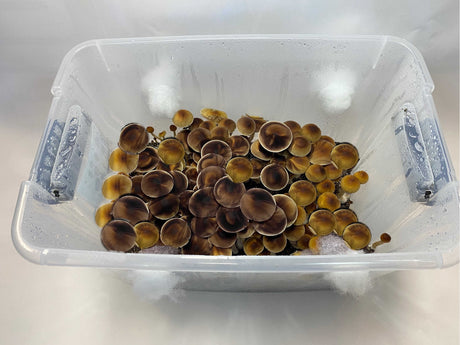
Bulk substrate is the nutrient-rich growing medium that colonized grain spawn gets mixed into to produce mushrooms. Grain spawn alone can produce a small flush, but mixed into bulk substrate at roughly a 1:3 ratio, the same amount of spawn produces dramatically larger harvests. Bulk substrate is what makes a monotub or other bulk-growing system produce real yields.
Do "manure-loving" mushrooms actually need manure in their substrate?
No — this is a common misconception. The term "manure-loving" describes where these species grow wild (on animal dung in pastures), not what they require in cultivation. They fruit beautifully on a properly pasteurized CVG substrate (coco coir, vermiculite, gypsum) with no manure at all. CVG actually has a significant advantage for newer growers: lower contamination risk, because manure is harder to consistently pasteurize. Many experienced commercial growers run CVG exclusively for this reason.
How do I use bulk substrate in a monotub grow?
The basic workflow is: mix your colonized grain spawn with bulk substrate at roughly a 1:3 ratio, pack it into a monotub, let it colonize at room temperature for 7 to 14 days, then open the air holes and introduce light to trigger fruiting. For a complete walkthrough with photos, see our Step-by-Step Bulk Monotub Grow Guide.
What's the difference between manure-based and wood-based substrate?
They're for different mushroom species. Manure-based substrates (CVG, CVG with composted manure, our Black Cow blend) work for the most common cultivated species — the ones that naturally grow on animal dung. Wood-based substrates (Master's Mix) are required for wood-loving species like lion's mane, shiitake, oyster varieties, king trumpet, and reishi. Putting a wood-lover on manure substrate or a manure-lover on wood substrate will fail or produce poorly.
What's the difference between pasteurization and sterilization?
Pasteurization (160°F for several hours) kills harmful contaminants while leaving some beneficial microbes intact, creating a competitive environment that helps prevent contamination during fruiting. Sterilization (250°F under pressure for several hours) kills everything. Manure-based substrates are pasteurized; Master's Mix and other nutrient-supplemented substrates are fully sterilized. We process each bag using the right method for its formulation.
How much substrate do I need for my monotub?
For a 28Q small monotub, 4 lbs of bulk substrate paired with one spawn bag, or use a 32oz grain jar with no extra substrate needed. For a 44Q medium monotub, 7.5 lbs paired with one spawn bag. For a 66Q large monotub, 10 lbs paired with two spawn bags. These produce the optimal grain-to-substrate ratio of roughly 1:3.
How is your substrate processed?
Every bag is made fresh in-house and processed in our dedicated 1200L Blue Myco autoclave. CVG and manure-based substrates are pasteurized at 160°F for 3 to 4 hours. Our Master's Mix (wood-based) is fully sterilized at 250°F for 3.5 hours. Each bag is hydrated to field capacity and ready for spawn-out on arrival.
Why is Midwest's Select your top-selling substrate?
Midwest's Select Bulk Substrate launched in 2012, and we've sold over 100,000 bags since then. It's our standard CVG recipe (coco coir, vermiculite, gypsum, and a touch of azomite for micronutrients), pasteurized at the right temperature and duration, hydrated to field capacity, and ready for spawn-out. The formulation is dialed in, the process is consistent, and it works reliably for the vast majority of bulk grows. For new growers, it's the safest starting point.
What is the Wild Horse Manure Booster?
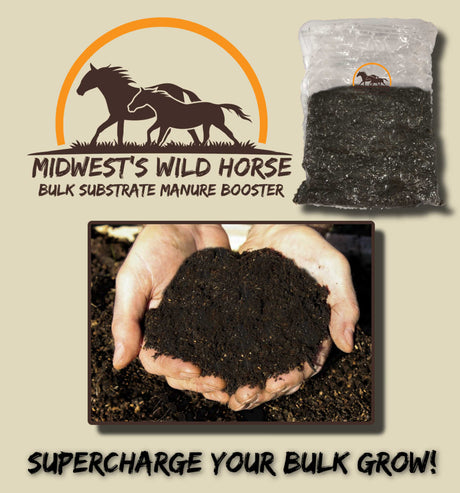
The Wild Horse Manure Booster is a unique 1-lb product sourced from a partner ranch in Wyoming — genuine wild horse manure, processed and brought to field capacity with a few additional ingredients. You add it to other substrates (we recommend 1 bag per 10 lbs of substrate) to enhance the nutrient profile of your grow. Many experienced growers swear by it for noticeably better results.
What is Willy's Blend?
Willy's Blend is a premium manure-based substrate created in collaboration with YouTube mushroom content creator Willy Myco. We import the base ingredients to produce this premium blend at our facility, then pasteurize and bag it like our other substrates. It's positioned as a step up from our standard Black Cow substrate for growers who want premium ingredients.
What's the Grass Lover's substrate for?
Our Grass Lover's substrate uses a different aged manure mixed with straw, designed for grass-loving species. It was developed in partnership with content creator GordoTek and works particularly well with the techniques he's popularized. Available as a substrate-only product or as part of our complete Grass Lover's Kits.
Can I save money buying substrate in bulk?
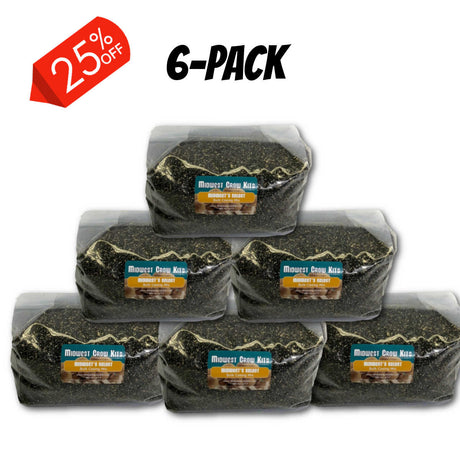
Yes. We offer 6-pack bundles of both Midwest's Select (30 lbs total) and Black Cow (30 lbs total) at a significant per-bag discount. These are popular with growers running multiple tubs or scaling up to commercial volumes.
Do I need to add water to your substrate bags?
No. Every bag is hydrated to field capacity (the optimal moisture level for mushroom colonization) before it leaves our facility. You can mix it directly with your colonized grain spawn and go. Adding water typically results in over-hydration, which leads to anaerobic conditions and contamination risk.
How long do substrate bags last before they need to be used?
Pasteurized and sterilized substrate bags are best used within 60 to 90 days of production for optimal performance. Refrigerated storage extends that window. We make substrate fresh daily and ship the freshest stock first, so the bag you receive will typically be just days old.