Cordyceps Militaris Mushroom Liquid Culture Syringe HIGHMILE22A Strain (10cc)
Cordyceps Militaris Mushroom Liquid Culture Syringe HIGHMILE22A Strain (10cc) is backordered and will ship as soon as it is back in stock.
Couldn't load pickup availability

Description
Description
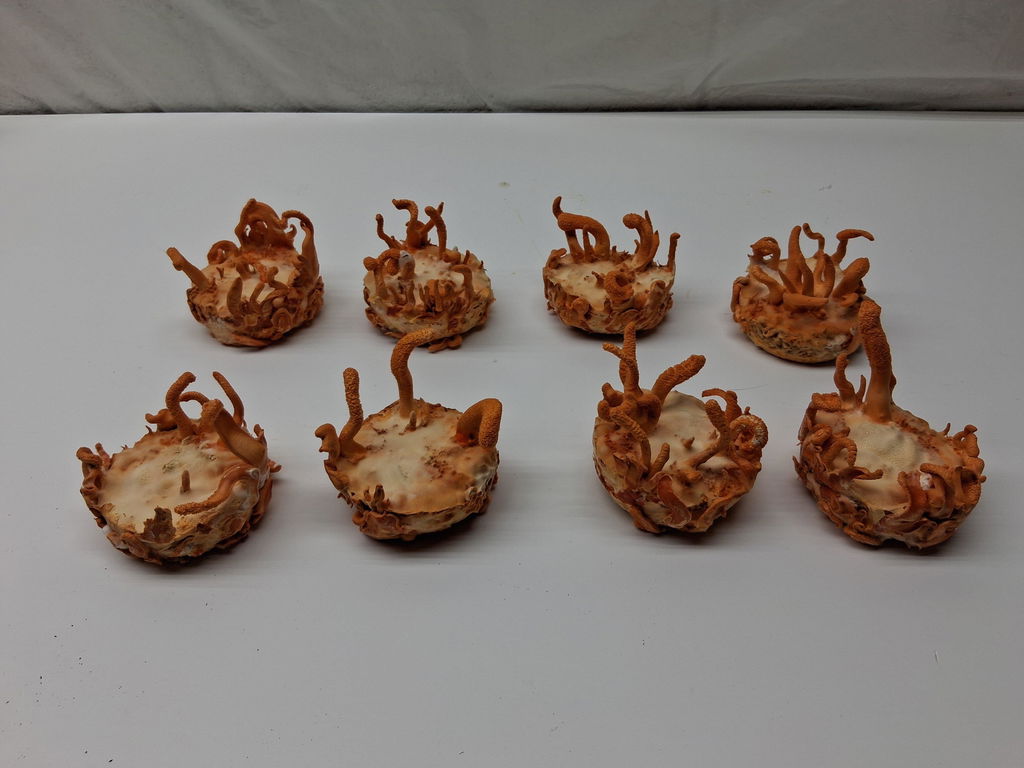
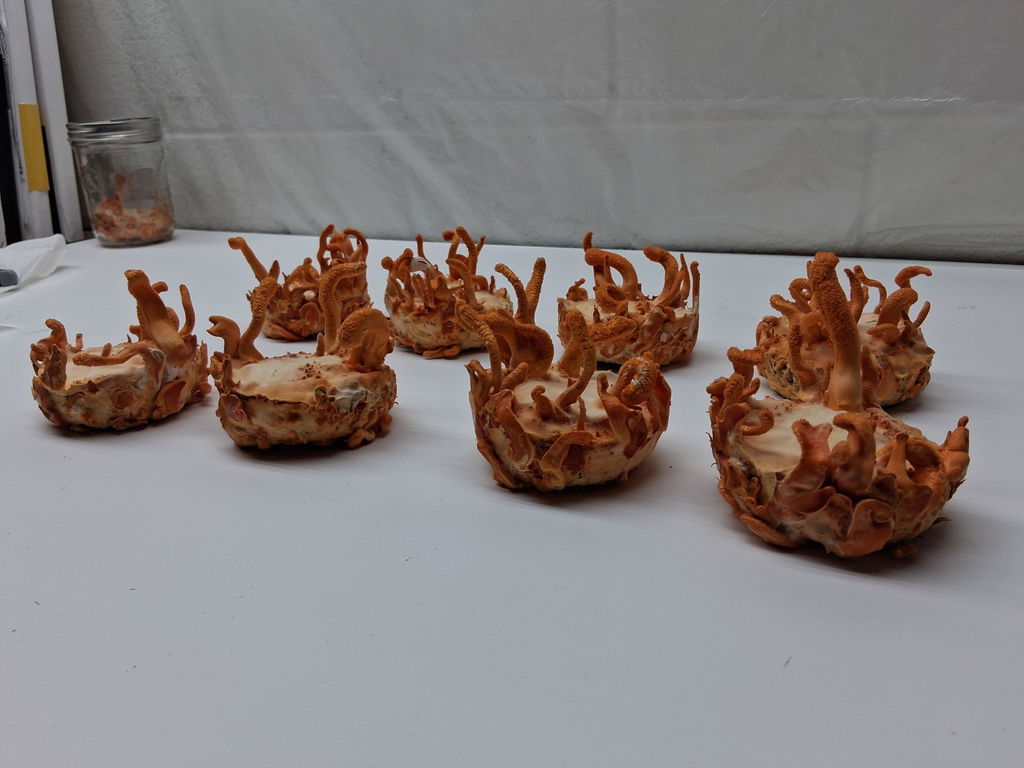
Cordyceps Militaris Liquid Culture Syringe (10cc) — HIGHMILE22A Strain — Cordyceps militaris, first-generation (G1) isolated genetics from Myco Labs. This is the bright orange, club-shaped Cordyceps, and it is the only member of the genus that is genuinely practical to grow at home. HIGHMILE22A was selected for aggressive colonization and consistent, heavy pinning on rice.
- SpeciesC. militaris
- Volume10cc
- StrainHIGHMILE22A
- DifficultyIntermediate
- Colonization~16 Days
Why Growers Choose Cordyceps Militaris
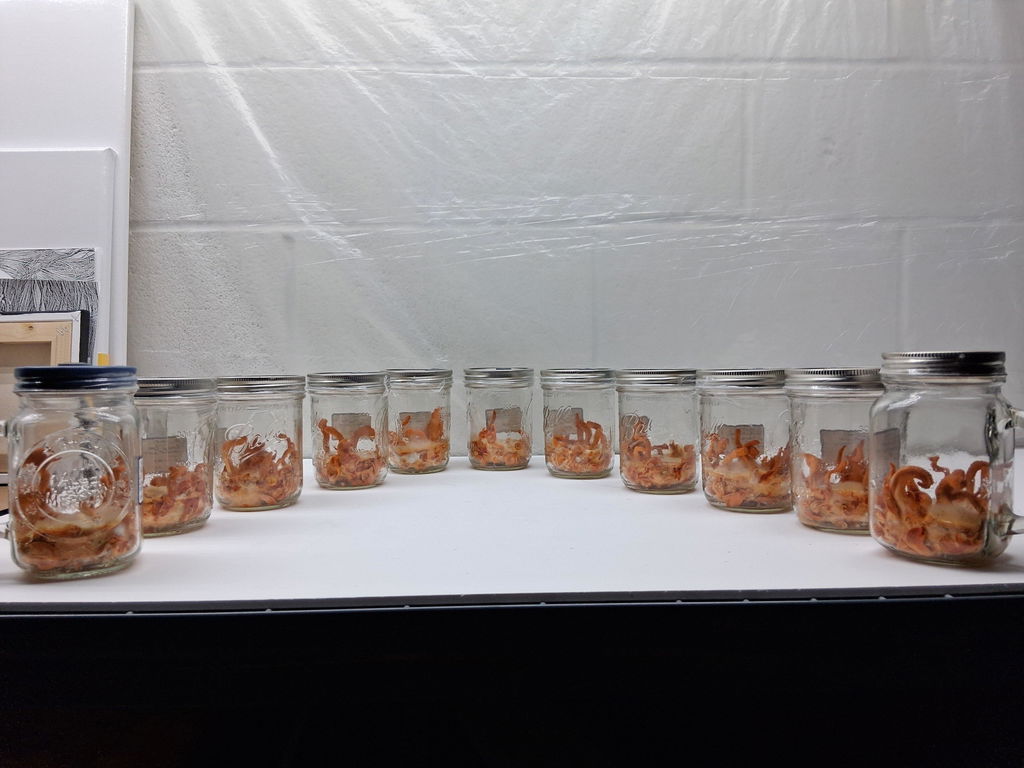
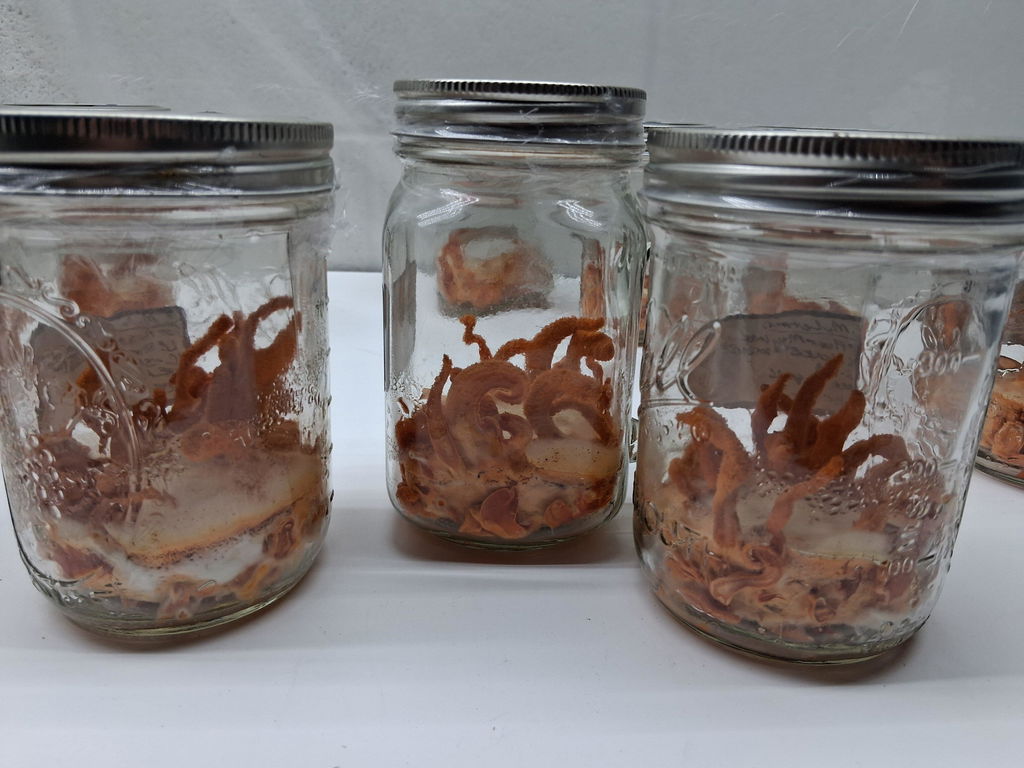
Cordyceps militaris breaks almost every rule the rest of this catalog follows. It does not want hardwood, straw or manure — it wants cooked white or brown rice in a jar. It does not fruit in the dark — it needs a daily light cycle, and without one the fruit bodies stay pale and stunted instead of turning that signature orange. And it fruits directly from the colonized grain, with no bulk substrate or casing step at all.
That makes it an unusually good fit for growers working in a small space. A shelf of quart jars under a cheap LED strip is a complete Cordyceps setup, with no monotub, no fruiting chamber and no humidifier required.
The wild species parasitizes moth pupae, which is where the dramatic photographs come from. That is not how it is cultivated, and no insects are involved at any stage of a rice grow.
What's In the Package
- One 10cc liquid culture syringe, sealed and lab-tested
- 16-gauge 1.5" luer lock needle
- Sterile alcohol prep pad
Cordyceps Militaris Growing Specifications
| Specification | Details |
|---|---|
| Scientific Name | Cordyceps militaris |
| Strain | HIGHMILE22A, first-generation (G1) isolate |
| Recommended Substrates | Cooked white or brown rice, typically supplemented |
| Incubation Temperature | 70–75°F |
| Incubation Humidity | 79–85% |
| Colonization Time | ~16 days |
| Fruiting Temperature | 50–70°F |
| Fruiting Humidity | 89–94% |
| Time to Harvest | ~15 days after fruiting conditions begin |
| Light Requirement | Required — 12 hours daily; without light, fruits stay pale |
| Fruit Body Size | Orange clubs, roughly 1–2" tall |
| Storage | Refrigerate at 35–45°F; do not freeze |
How to Use Your Liquid Culture Syringe
- Let the syringe come to room temperature, then shake gently to redistribute the mycelium evenly through the broth.
- Flame-sterilize the needle until it glows orange and let it cool for a few seconds.
- Wipe the injection port on your sterilized rice jar with the alcohol prep pad.
- Inject 2–3cc per quart jar. One 10cc syringe inoculates roughly three to four jars.
- Incubate at 70–75°F in the dark for around sixteen days until the rice is fully colonized and white.
- Move the jars into indirect light on a 12-hour cycle at 50–70°F and loosen the lids for air exchange. Orange primordia should appear within one to two weeks.
Frequently Asked Questions
Do I need insects to grow Cordyceps militaris?
No. In the wild this species colonizes moth pupae, but in cultivation it grows on cooked rice and no insects are involved at any point. Rice is the standard substrate because it is cheap, sterilizes easily and produces consistent fruiting. This is also the practical difference between C. militaris and Ophiocordyceps sinensis, which has never been successfully fruited on an artificial substrate.
Why is my Cordyceps white instead of orange?
Almost always a light problem. Cordyceps militaris requires a daily light cycle to develop its orange pigment and to form proper club-shaped fruit bodies. Colonize in the dark, then move jars into indirect light or under an LED on roughly 12 hours on and 12 hours off once the rice is fully colonized. Pale, thin, antler-like growth is the classic sign of too little light.
What substrate should I use for Cordyceps?
Cooked white or brown rice in jars, usually with added nutrition. Unlike most gourmet species, Cordyceps fruits directly from the colonized grain — there is no spawning to bulk substrate and no casing layer. That makes the whole grow a single-container process from injection to harvest.
How much liquid culture do I use per jar?
Use 2–3cc per quart jar of prepared rice. A single 10cc syringe will inoculate roughly three to four jars. Adding more than the recommended dose does not speed colonization meaningfully and simply uses up the syringe faster.
What temperature does Cordyceps need?
Colonize at 70–75°F, then drop to 50–70°F for fruiting. The cooler end of that fruiting range tends to produce denser, better-colored clubs, though it slows things down. Total time from injection to harvest runs roughly a month.
Do I need a flow hood or still air box to use liquid culture?
A still air box is strongly recommended and a laminar flow hood is better still. Liquid culture syringes ship sealed and lab-tested, but the moment you pierce an injection port you are exposing your substrate to whatever is in the room air. Rice is especially prone to contamination, so sterile technique matters more here than with most species.
How should I store the syringe before use?
Keep it refrigerated between 35 and 45°F and never freeze it — freezing ruptures the cell walls and kills the culture. Store it in the sealed bag it shipped in, away from strong odors. Bring it back to room temperature and shake gently before injecting.
Packed to Arrive Alive
A liquid culture syringe is living mycelium, and the trip from our Illinois lab to your door is the part of its life you have the least control over. That is why every Myco Labs liquid culture ships inside a foil-lined insulated mailer rather than a plain envelope. The insulation buffers the syringe against summer heat sitting in a delivery truck and against sub-freezing temperatures in winter, so your culture arrives viable in either extreme.

When it arrives: move the syringe to the refrigerator at 35–45°F until you are ready to inoculate. Never freeze it. Bring it back to room temperature and shake gently before use.
Sold as a mycological culture for cultivation purposes. Nothing on this page is intended to diagnose, treat, cure, or prevent any disease.
Our Growing Experts Recommend
Products our growers commonly use with this item