Bonsai Lab Guard Professional Laser Particulate/Contaminate Meter PM 2.5
Bonsai Lab Guard Professional Laser Particulate/Contaminate Meter PM 2.5 is backordered and will ship as soon as it is back in stock.
Couldn't load pickup availability

Description
Description
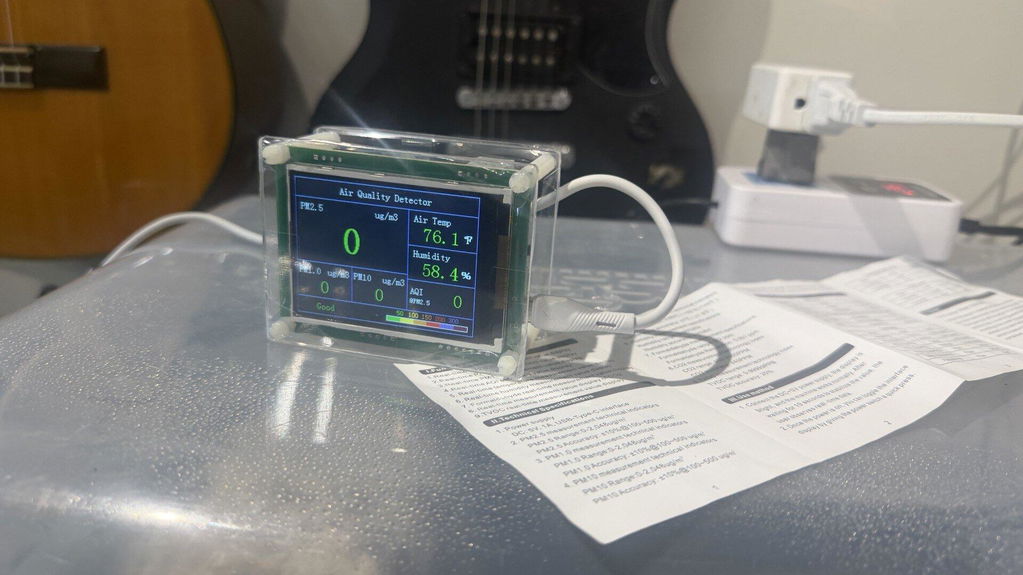
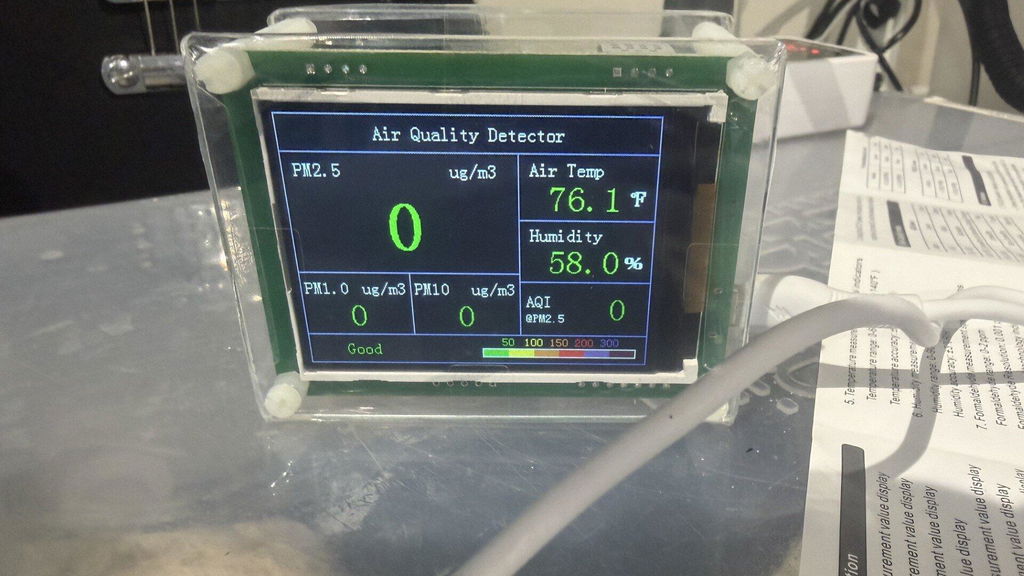
You can't see whether your flow hood is actually working. The Bonsai Lab Guard puts a number on it — a laser particle sensor that detects particulate down to 0.3 microns and reports PM1.0, PM2.5 and PM10 in real time, alongside temperature and humidity. Point it at your filter face and you know in seconds whether your clean air is clean.
- 0.3 microndetection floor
- PM1.0 / 2.5 / 10simultaneous
- USB-Cpowered
- Temp + RHalso displayed
- 6 levelscolor-coded

What it's for in a mycology lab
- Verify a laminar flow hood — compare room air against the air coming off the filter face and see the difference as a number, not a guess.
- Track HEPA filter condition over time — readings that climb run over run tell you to inspect the filter and its seal.
- Check a room before sterile work — know whether the space settled down after sweeping, moving substrate or running a fan.
- Confirm a still air box or clean bench is genuinely still before you open a bag or pour plates.
- Watch temp and humidity in the same glance, which matters as much in an incubation room as particulate does at the bench.
How to check your flow hood with it
- Plug the meter into USB-C power and give it a minute to stabilize.
- Take a baseline reading in the room, away from the hood, and note the PM numbers.
- Switch the hood on and let it run for a few minutes.
- Hold the meter in the airstream near the filter face and read it again.
- Compare. A healthy HEPA filter should read dramatically lower than the room — if it doesn't, inspect the filter, the gasket and the seal around it.

How it measures
The sensor uses the laser light scattering principle with a Mie theory algorithm, which calculates particle size and count from how light scatters off particles passing through the chamber. That's the same measurement method used in professional air quality instruments, in a unit small enough to sit on the bench.
No battery — USB-C only. The Lab Guard has no internal cell and runs from USB-C power whenever it's in use, so plan on a port or a USB power brick at the bench.
Specifications
| Measurement | Range | Accuracy |
|---|---|---|
| PM2.5 | 0–2,048 µg/m³ | ±10% @ 100–500 µg/m³ |
| PM10 | 0–2,048 µg/m³ | ±10% @ 100–500 µg/m³ |
| PM1.0 | 0–2,048 µg/m³ | ±10% @ 100–500 µg/m³ |
| Temperature | 32°F to 140°F (0–60°C) | ±1.8°F (±1°C) |
| Humidity | 20%–90% RH | ±3% RH |
| Smallest particle detected | 0.3 microns | — |
| Power | USB-C, no internal battery | — |
| SKU | BLG1 | — |
Frequently asked questions
Will this tell me if my flow hood is still working?
Yes, by comparison. Take a reading in the room, then take one in the airstream at the filter face. A working HEPA filter should read far lower than the surrounding room. If the two numbers are close, something is wrong with the filter, the gasket or the seal. Check it the same way every time so your readings stay comparable.
Does it identify mold spores or bacteria specifically?
No. It counts and sizes particles, it does not identify what they are. Dust, smoke, skin cells and spores all register as particulate. That is still exactly what you want for checking filtration and room cleanliness, but it is not a contamination test and will not tell you which organism you are looking at.
Does it run on batteries?
No. The Lab Guard is USB-C powered with no internal battery, so it needs to stay plugged into a port or USB power brick while you use it.
How small a particle can it see?
Down to 0.3 microns, which is the size range HEPA filtration is rated against. It reports PM1.0, PM2.5 and PM10 at the same time.
What do the colors mean?
The display uses six color-coded levels so you can read the air at a glance without interpreting raw numbers. The numeric readout is there when you want the detail.
Does it measure temperature and humidity too?
Yes. It reads 32°F to 140°F with 1.8°F accuracy, and 20% to 90% relative humidity with 3% accuracy, displayed alongside the particulate counts.