Golden (Yellow) Oyster Liquid Culture Syringe (10cc)
Golden (Yellow) Oyster Liquid Culture Syringe (10cc) is backordered and will ship as soon as it is back in stock.
Couldn't load pickup availability

Description
Description
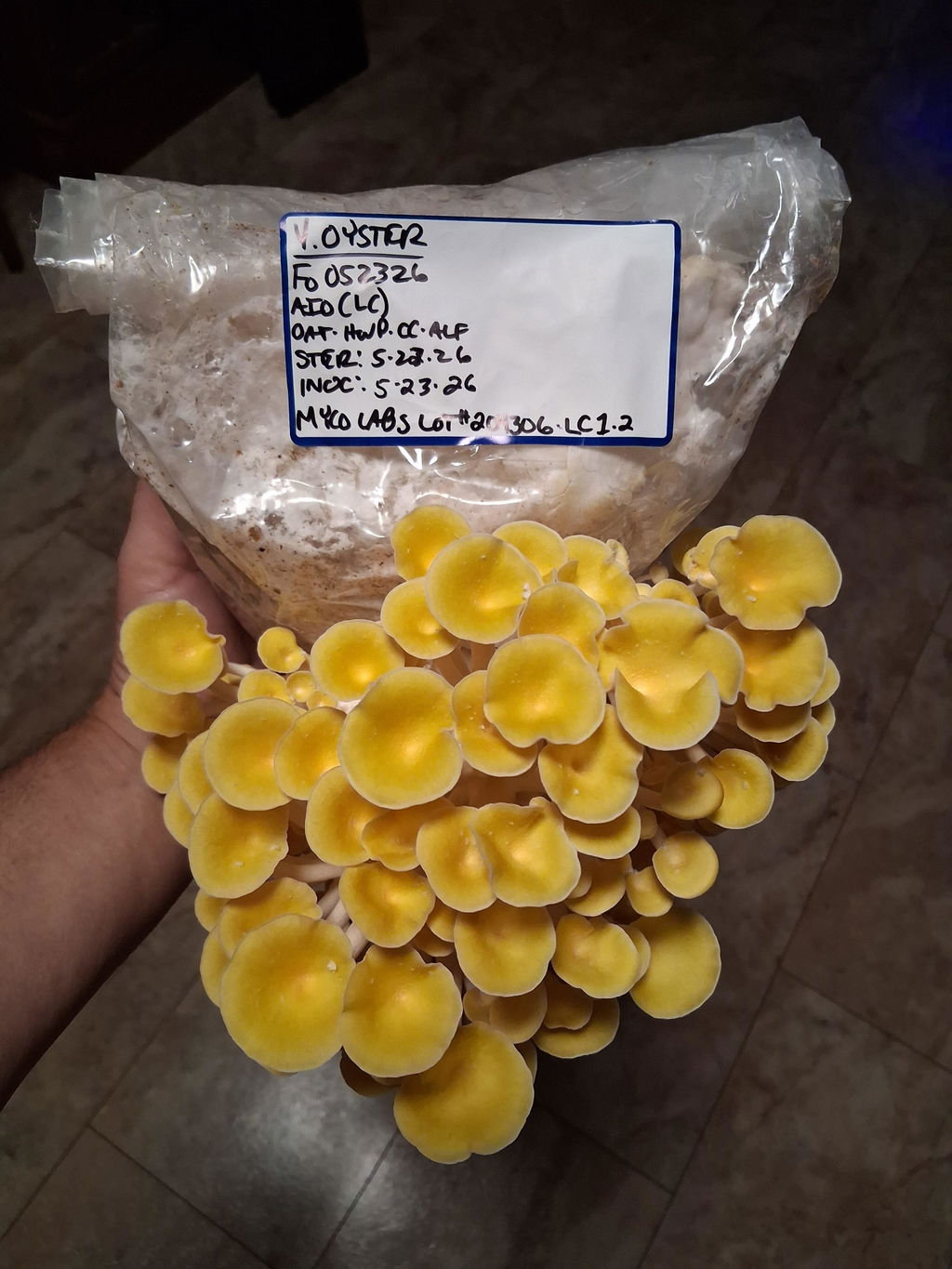
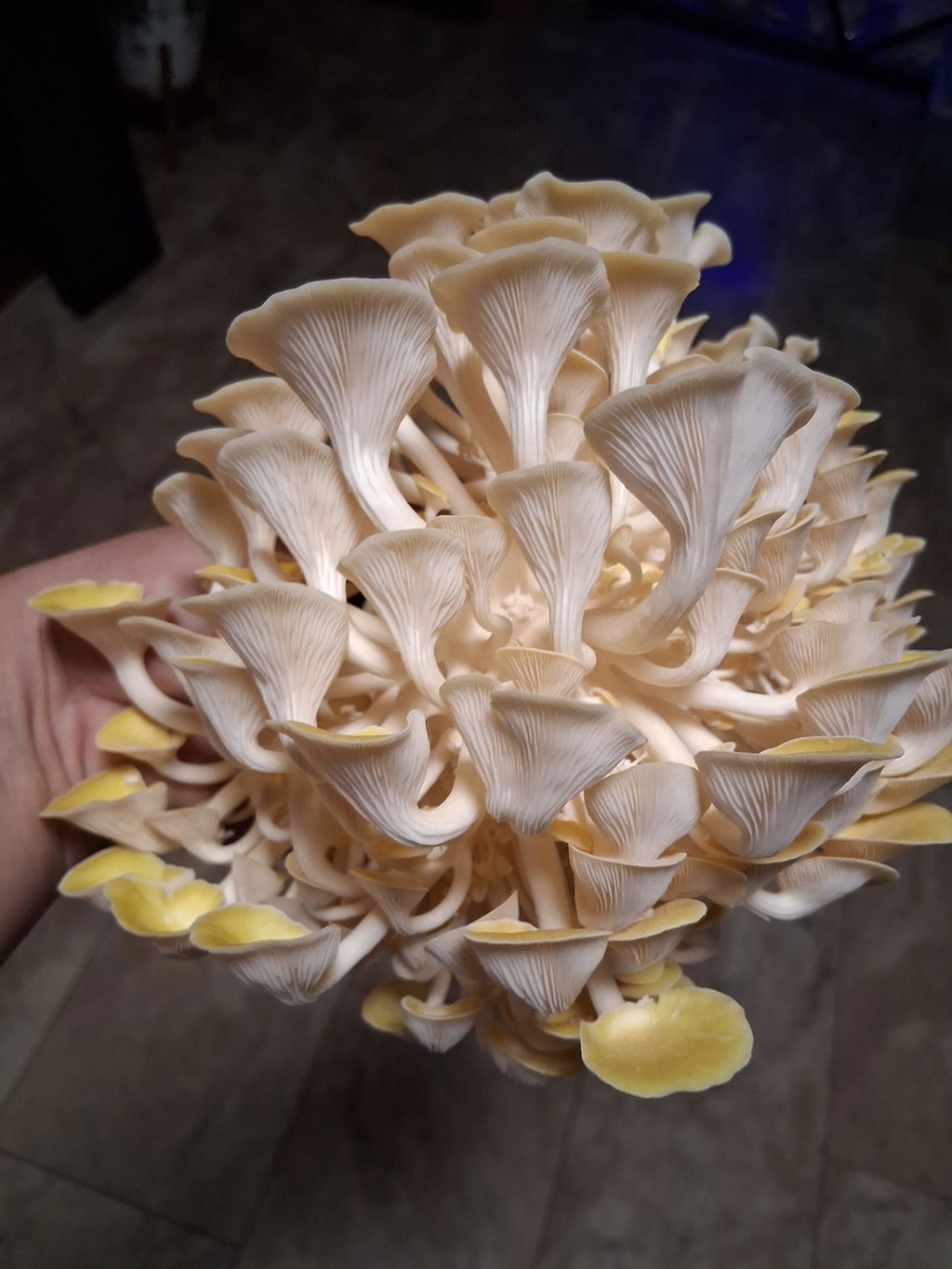
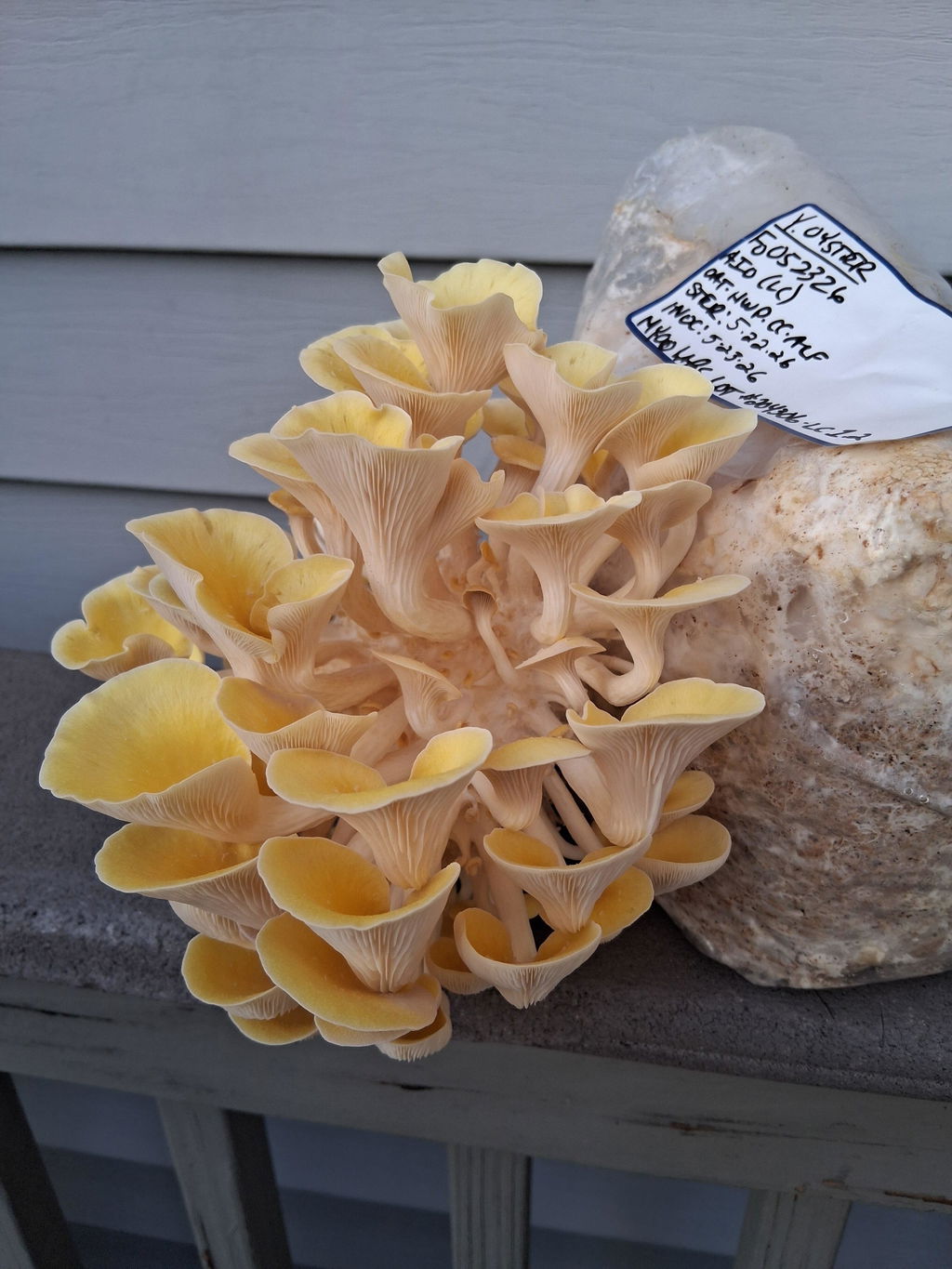
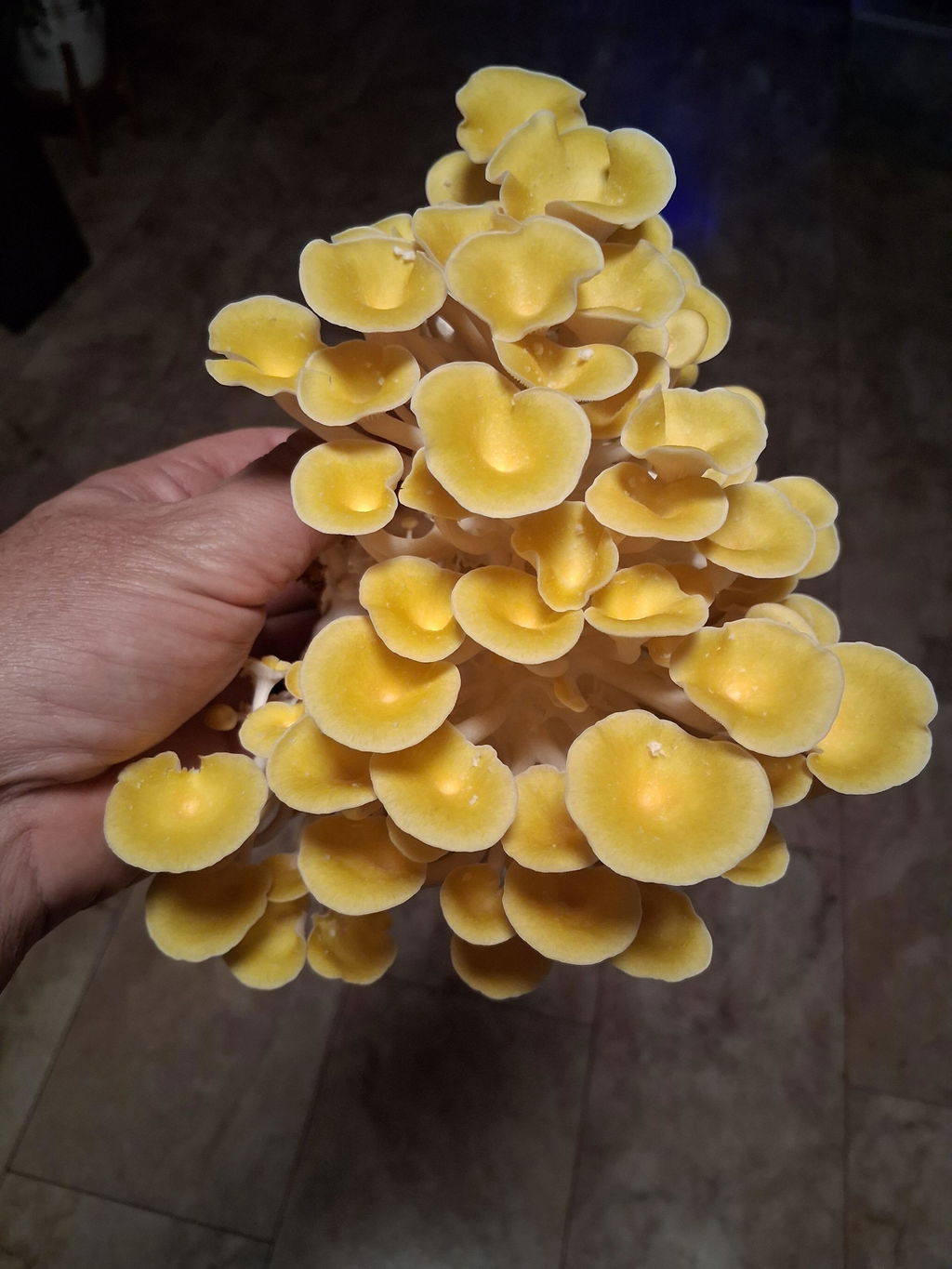
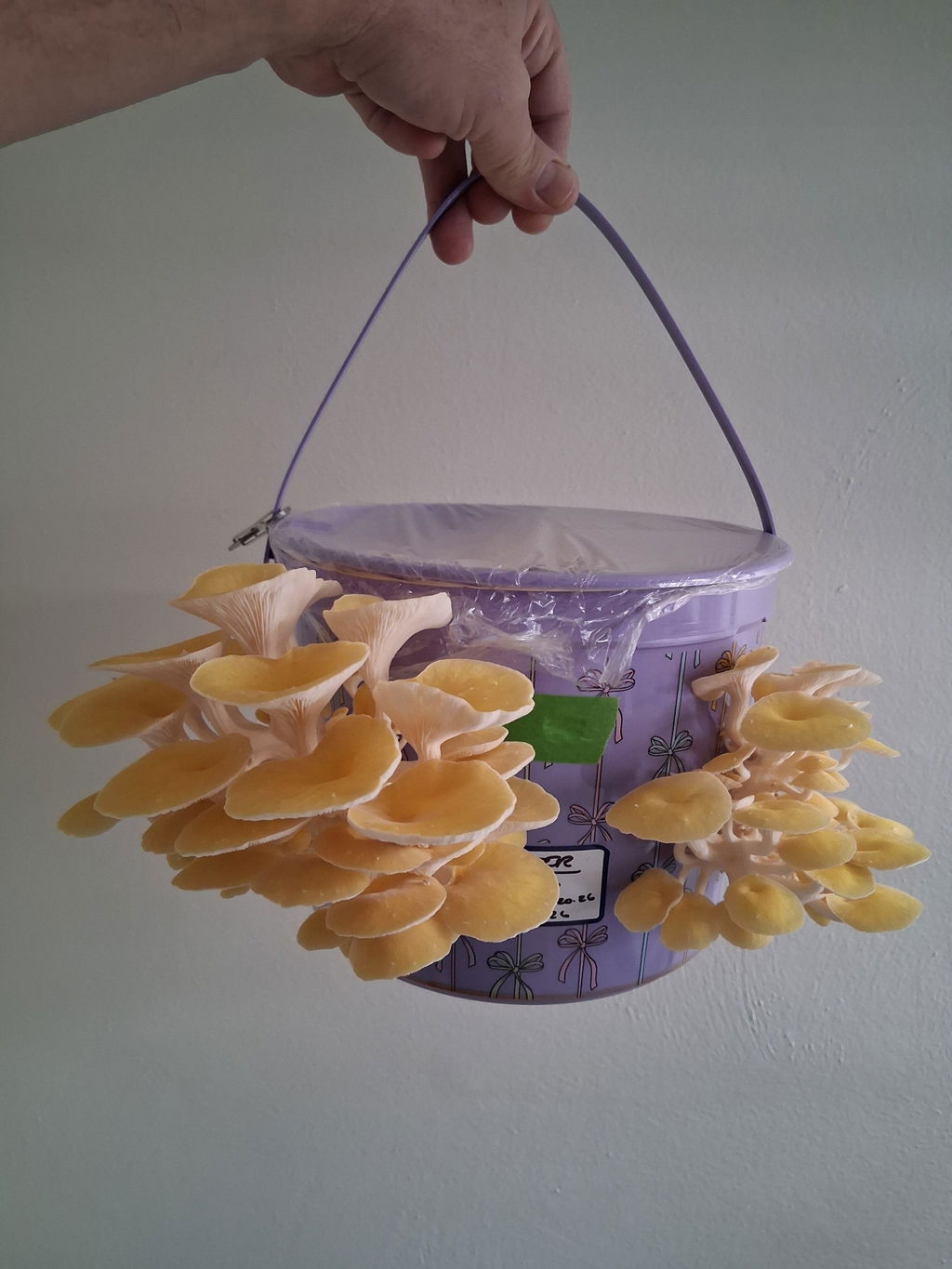
Golden (Yellow) Oyster Liquid Culture Syringe (10cc) — Pleurotus citrinopileatus, first-generation (G1) isolated genetics from Myco Labs. Known as tamogitake in Japan, the Golden Oyster forms tight bouquets of brilliant yellow, fan-shaped caps. It is the most photogenic mushroom in this catalog and one of the fastest, going from injection to harvest in about a month.
- SpeciesP. citrinopileatus
- Volume10cc
- GeneticsG1 Isolated
- DifficultyBeginner
- Colonization~11 Days
Why Growers Choose Golden Oyster
Golden Oyster colonizes grain in about eleven days, the quickest turnaround of anything we carry, and fruits in another fourteen. If you want a result fast — for a class, a market stall, or just to prove your sterile technique works — this is the culture to reach for.
It is a warm-weather species native to eastern Russia, northern China and Japan, fruiting best between 71 and 78°F. That puts it alongside Pink Oyster as a summer strain, and makes it a poor choice for an unheated winter grow space where Blue Oyster would be the better pick.
Two things to know about the harvest. The flavor is distinctly nutty and slightly cashew-like when properly cooked, but it must be cooked thoroughly — raw or undercooked Golden Oysters upset some people's stomachs. And the clusters are delicate, bruising and wilting faster than any other oyster, so they are best eaten within a day or two of picking.
What's In the Package
- One 10cc liquid culture syringe, sealed and lab-tested
- 16-gauge 1.5" luer lock needle
- Sterile alcohol prep pad
Golden Oyster Growing Specifications
| Specification | Details |
|---|---|
| Scientific Name | Pleurotus citrinopileatus |
| Also Known As | Yellow Oyster, tamogitake, golden oyster |
| Recommended Substrates | Straw, hardwood sawdust, spent coffee grounds, cellulose-rich materials |
| Incubation Temperature | 78–81°F |
| Incubation Humidity | 80–83% |
| Colonization Time | ~11 days |
| Fruiting Temperature | 71–78°F |
| Fruiting Humidity | 90–93% |
| Time to Harvest | ~14 days after fruiting conditions begin |
| Fresh Air Exchange | High — oysters need 4–6 air exchanges per hour |
| Shelf Life After Harvest | Short — delicate clusters, best cooked within 1–2 days |
| Storage | Refrigerate at 35–45°F; do not freeze |
How to Use Your Liquid Culture Syringe
- Let the syringe come to room temperature, then shake gently to redistribute the mycelium evenly through the broth.
- Flame-sterilize the needle until it glows orange and let it cool for a few seconds.
- Wipe the injection port on your grain spawn bag or jar with the alcohol prep pad.
- Inject 2–3cc per quart jar, or 3–5cc per 3–5 lb spawn bag. One 10cc syringe inoculates roughly 2–4 containers.
- Incubate at 78–81°F in the dark for around eleven days, shaking once at roughly 30% colonization.
- Spawn to bulk substrate at roughly 1:3 grain-to-substrate and introduce fresh air. Pins form quickly in warm conditions.
Frequently Asked Questions
How fast does Golden Oyster grow?
It is the fastest colonizer we carry — roughly eleven days on grain at 78–81°F, with fruiting following in about fourteen more. That makes the full cycle around a month from injection to harvest, and it is why Golden Oyster is a common choice for classroom demonstrations and first grows.
Do Golden Oyster mushrooms need to be cooked?
Yes, and thoroughly. Like most oyster species, Golden Oysters should never be eaten raw or lightly cooked — some people experience digestive upset otherwise. Cooked properly they develop a distinctly nutty, almost cashew-like flavor. Sauté until the edges crisp rather than steaming them soft.
What temperature does Golden Oyster need?
Warm. Incubate at 78–81°F and fruit at 71–78°F. This is a subtropical species and it slows badly in a cool room, so it pairs naturally with summer growing. If your space runs below 65°F, Blue Oyster is the better seasonal choice.
Why do my Golden Oysters wilt so quickly after harvest?
That is normal for the species. Golden Oyster forms thin, delicate caps that bruise easily and lose moisture faster than Blue, Pearl or King varieties. Harvest as a whole cluster rather than picking individual caps, keep them dry and refrigerated, and plan to cook within a day or two. For longer storage, dry them — they rehydrate well.
How much liquid culture do I use per bag or jar?
Use 2–3cc per quart grain jar and 3–5cc per 3–5 lb spawn bag. A single 10cc Golden Oyster syringe will inoculate roughly two to four containers. Adding more than the recommended dose does not speed colonization meaningfully and simply uses up the syringe faster.
Do I need a flow hood or still air box to use liquid culture?
A still air box is strongly recommended and a laminar flow hood is better still. Liquid culture syringes ship sealed and lab-tested, but the moment you pierce an injection port you are exposing your grain to whatever is in the room air. Working in still air with flame-sterilized tools dramatically improves your success rate.
How should I store the syringe before use?
Keep it refrigerated between 35 and 45°F and never freeze it — freezing ruptures the cell walls and kills the culture. Store it in the sealed bag it shipped in, away from strong odors. Bring it back to room temperature and shake gently before injecting.
Packed to Arrive Alive
A liquid culture syringe is living mycelium, and the trip from our Illinois lab to your door is the part of its life you have the least control over. That is why every Myco Labs liquid culture ships inside a foil-lined insulated mailer rather than a plain envelope. The insulation buffers the syringe against summer heat sitting in a delivery truck and against sub-freezing temperatures in winter, so your culture arrives viable in either extreme.

When it arrives: move the syringe to the refrigerator at 35–45°F until you are ready to inoculate. Never freeze it. Bring it back to room temperature and shake gently before use.
Our Growing Experts Recommend
Products our growers commonly use with this item